Legendary Pokémon in Generation 6
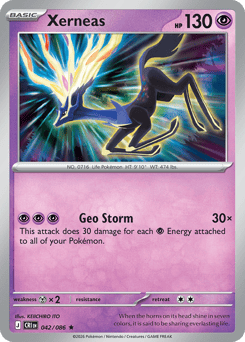
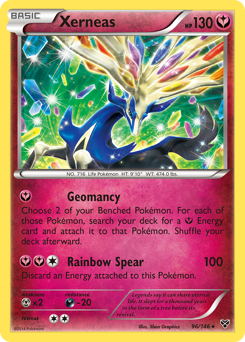
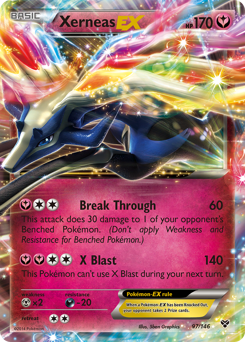
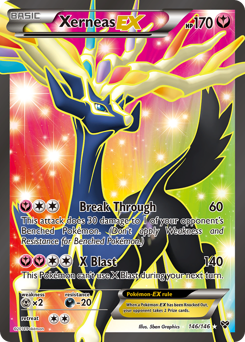
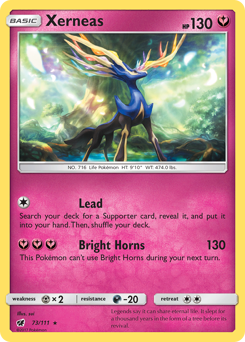
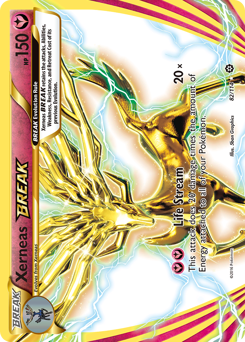
 Xerneas is the undisputed best Legendary Pokémon in Generation 6 for in-game progression. Its Fairy typing dominates the Kalos region, while the combination of its signature move Geomancy and a Power Herb allows it to sweep the Elite Four effortlessly.
  Yveltal offers unparalleled sustain, while
  Zygarde remains a mechanically weaker late-game option.
The Best Pick For Your Playstyle
Choosing your primary legendary depends heavily on your immediate goals across the Kalos and Hoenn campaigns. Rather than looking at raw base stat totals, you must evaluate how these creatures interact with the specific challenges of their respective games.
- Xerneas (The Story Sweeper): Equip a Power Herb, press Geomancy, and watch every Elite Four member fall to Moonblast.
- Yveltal (The Nuzlocke MVP): Oblivion Wing provides massive damage and self-healing, ensuring survival through grueling gauntlets.
- Zygarde (The Lore Investment): Caught purely to complete the Pokédex and prepare for its expanded role in the upcoming Pokémon Legends: Z-A.
- Primal
 Groudon (The Hoenn Conqueror): Desolate Land evaporates Water-type weaknesses, making it the ultimate brute-force option in Omega Ruby.
Each of these options serves a distinct purpose. Your version choice dictates your access to these specific playstyles.
1. Xerneas
Xerneas dictates the pace of Pokémon X the moment you capture it in the Team Flare Secret HQ. Its pure Fairy typing grants it immunity to Dragon-type attacks and resistances to Dark, Fighting, and Bug. This defensive profile perfectly counters the late-game threats posed by Lysandre and the Elite Four.
The true value of Xerneas lies in its signature move, Geomancy. This attack requires two turns to charge, boosting Special Attack, Special Defense, and Speed by two stages each. By giving Xerneas a Power Herb, you bypass the charging turn entirely. This single-turn setup creates an unstoppable sweeping machine that outspeeds and one-shots nearly every in-game opponent.
Its ability, Fairy Aura, further amplifies the damage of Fairy-type moves for all Pokémon on the field. While this can theoretically buff opponents, the AI rarely fields Fairy-types capable of surviving a boosted Moonblast. Xerneas represents the pinnacle of efficient, low-effort story completion.
2. Yveltal
Yveltal serves as the offensive engine for Pokémon Y players. Its Dark/Flying typing provides a robust offensive spread, though it leaves it vulnerable to the common Electric, Ice, Rock, and Fairy types. You must position Yveltal carefully against Elite Four members like Siebold and Diantha.
Oblivion Wing defines Yveltal's in-game identity. This Flying-type attack deals significant damage and restores Yveltal's HP by 75% of the damage dealt. This absurd level of sustain allows Yveltal to function as a self-sufficient tank during long stretches of the post-game or during restricted challenge runs.
Dark Aura operates identically to Fairy Aura, boosting Dark-type damage across the board. Pair Yveltal with Sucker Punch or Dark Pulse to maximize this passive benefit. While it lacks the immediate setup sweeping potential of Xerneas, Yveltal's sheer longevity makes it a highly reliable anchor for any Kalos team.
3. Zygarde
Zygarde suffers from middle-child syndrome within the Generation 6 ecosystem. Found deep within Terminus Cave after the Hall of Fame, this Dragon/Ground type arrives too late to impact the main story. With Pokémon Legends: Z-A arriving in 2025, Zygarde is currently the focal point of intense lore speculation, but its mechanical reality in X and Y is underwhelming.
In Generation 6, Zygarde is locked into its 50% Forme. It lacks the Power Construct ability and the Complete Forme that made it a dominant force in later games like Scarlet and Violet. Its stats are balanced but unspectacular, leaving it outclassed by standard Dragons like  Garchomp or
  Salamence.
Its ability, Aura Break, reverses the effects of Fairy Aura and Dark Aura. Because you will almost never fight Xerneas or Yveltal during standard gameplay after capturing Zygarde, this ability is effectively useless. Zygarde is a Pokédex filler in Kalos, completely absent from serious competitive viability until its Generation 7 mechanical overhaul.
Quick Tier List
This rapid assessment categorizes the Generation 6 legendary roster based strictly on their in-game utility, ease of use, and immediate power level upon capture.
- S-Tier: Xerneas, Primal Groudon, Mega
 Rayquaza. These completely break the difficulty curve of their respective games.
 - A-Tier: Yveltal, Primal
 Kyogre. Exceptional power and utility, requiring only slight tactical awareness regarding type matchups.
 - B-Tier:
 Diancie,
  Volcanion,
  Hoopa Unbound. Strong mythicals held back by late availability or event-exclusive distribution methods.
 - C-Tier: Zygarde (50% Forme),
 Deoxys. Outclassed by non-legendary alternatives or mechanically restricted within the Generation 6 engine.
Keep in mind that event-exclusive Pokémon cannot be legitimately obtained in a fresh playthrough today without external hardware or trading.
Methodology
This ranking evaluates Pokémon based on their performance within the Generation 6 software environment. We prioritize in-game availability, typing advantages against major boss fights, and reliance on external items. Competitive Smogon tiers for Scarlet and Violet are ignored here, as Zygarde's modern viability does not reflect its historical performance in Kalos.
We also weigh the impact of signature moves and abilities. A Pokémon that requires complex setup is ranked lower than one that provides immediate, overwhelming value. The impending release of Pokémon Legends: Z-A influences the lore discussion, but mechanical rankings remain strictly tied to X, Y, Omega Ruby, and Alpha Sapphire.
Defining the Generation 6 Legendary Landscape
Generation 6 marked the franchise's transition into fully 3D main series titles. Pokémon X, Y, Omega Ruby, and Alpha Sapphire completely overhauled how legendary encounters were presented. The cinematic capture sequences for Xerneas and Yveltal set a new standard for narrative integration, forcing the player to catch them to progress the story.
This era introduced Mega Evolution and Primal Reversion. These mechanics shattered existing stat ceilings. Instead of simply introducing Pokémon with higher base numbers, Game Freak created mid-battle transformations that altered typings, abilities, and roles. The Kalos region focused on the philosophical duality of life and destruction, while the Hoenn remakes expanded on the primal forces of land and sea.
The upcoming Pokémon Legends: Z-A (2025) promises to return players to Lumiose City. This makes understanding the original Generation 6 legendary mechanics crucial, as Zygarde's lore and potential new forms will directly build upon the foundations laid in Pokémon X and Y.
The Primal Titans of Hoenn: Groudon & Kyogre (OR/AS)
Omega Ruby and Alpha Sapphire introduced Primal Reversion, a mechanic distinct from Mega Evolution. By holding the Red Orb or Blue Orb, Groudon and Kyogre transform instantly upon entering the field. This does not consume your single Mega Evolution slot for the battle, allowing you to field a Primal Titan alongside a Mega Evolved Pokémon.
Primal Groudon gains the Fire typing, making it Ground/Fire. Its ability, Desolate Land, creates extremely harsh sunlight that completely nullifies Water-type attacks. This removes its double weakness to Water, turning Primal Groudon into an impenetrable physical wall with monstrous offensive stats. It forces the opponent to rely on Ground attacks to deal super-effective damage.
Primal Kyogre retains its pure Water typing but gains Primordial Sea. This heavy rain nullifies Fire-type attacks. While less defensively transformative than Groudon's upgrade, the sheer damage output of a rain-boosted Origin Pulse makes Primal Kyogre a devastating special attacker. Their clash defined the narrative and mechanical peak of the Hoenn remakes.
Mega Rayquaza & The Delta Episode
Mega Rayquaza stands as the most mechanically disruptive Pokémon introduced in Generation 6. Unlike every other Mega Evolution, Rayquaza does not require a Mega Stone. It only needs to know the move Dragon Ascent. This allows Mega Rayquaza to hold a traditional item, such as a Life Orb or Choice Band, pushing its damage output to mathematically absurd levels.
Its ability, Delta Stream, creates strong winds that remove the flying-type weaknesses. Electric, Ice, and Rock attacks deal neutral damage to Mega Rayquaza. This combination of extreme power, item flexibility, and defensive mitigation led to its unprecedented ban from the Ubers tier, forcing the creation of the Anything Goes bracket.
You obtain Rayquaza during the Delta Episode, a post-game narrative in OR/AS featuring the lore-keeper Zinnia. After capturing Rayquaza and destroying the incoming meteor, you are immediately thrust into a battle against Deoxys. This sequence remains one of the most cinematic and rewarding legendary gauntlets in the franchise.
The Mythical Trio: Diancie, Hoopa, and Volcanion
Generation 6 distributed three distinct Mythical Pokémon through real-world events and movie tie-ins. Diancie, a Rock/Fairy type, is the only Mythical capable of Mega Evolution. Mega Diancie gains the Magic Bounce ability, reflecting status moves, and receives massive boosts to its offensive stats, turning a defensive wall into a potent mixed attacker.
Hoopa introduced form-changing mechanics via the Prison Bottle item. Its Confined form is Psychic/Ghost, but using the bottle transforms it into Hoopa Unbound, a towering Psychic/Dark type. Hoopa Unbound possesses Hyperspace Fury, a signature move that bypasses Protect and Detect, making it a terrifying wallbreaker.
Volcanion, the final Generation 6 Mythical, boasts a unique Fire/Water typing. Its signature move, Steam Eruption, functions like a stronger Scald with a high chance to burn the target. Because these Pokémon were distributed via limited-time serial codes and local wireless events, obtaining them today requires trading with legacy players or utilizing unofficial distribution servers.
Competitive Legacy and Strategic Impact
The competitive landscape of Generation 6 was entirely dictated by the legendary Pokémon introduced in these games. The Ubers tier transformed into a chaotic weather war between Primal Groudon and Primal Kyogre. Speed control and precise pivoting were required to ensure your weather condition remained active.
In the official VGC 2016 format, teams were allowed to use two restricted legendary Pokémon. This led to the infamous "Big Six" team composition, which heavily featured Primal Groudon and Xerneas. Xerneas's Power Herb Geomancy strategy was so dominant that players were forced to run dedicated counters like  Crobat with Haze or
  Amoonguss with Clear Smog just to survive the setup.
Mega Rayquaza's existence forced a paradigm shift in tiering philosophy. By breaking the established rules of Mega Evolution, it proved that Game Freak was willing to sacrifice balance for thematic power. The resulting Anything Goes tier remains a testament to the raw, unfiltered strength of Generation 6's legendary designs.
Collecting, Shiny Hunting, and Enduring Appeal
Building a complete Living Dex of Generation 6 legendaries presents unique challenges today. Xerneas, Yveltal, and Zygarde are shiny-locked in Pokémon X and Y. You cannot obtain their shiny forms through soft-resetting in their native games. Players had to rely on the 2016 XYZ Wi-Fi distribution events to secure these alternate colorations.
Conversely, Omega Ruby and Alpha Sapphire are a shiny hunter's paradise. The mirage spot mechanic allows players to encounter and soft-reset for dozens of legendary Pokémon from previous generations. However, Groudon, Kyogre, Rayquaza, and Deoxys remain shiny-locked in the Hoenn remakes, forcing hunters to look toward older titles or newer games like Ultra Sun and Ultra Moon.
The mechanics introduced here laid the groundwork for future gimmicks. Primal Reversion's instant stat boosts heavily influenced the design of Dynamax, while Mega Evolution remains the most requested feature for future titles. The enduring appeal of the Kalos and Hoenn legendaries lies in their sheer, unapologetic power.
- Pokémon
- Xerneas
- Type
- Fairy
- Total
- 680
- Pokémon
- Yveltal
- Type
- Dark, Flying
- Total
- 680
- Pokémon
- Zygarde
- Type
- Dragon, Ground
- Total
- 600
| Pokémon | Type | Total |
|---|---|---|
| Xerneas | Fairy | 680 |
| Yveltal | Dark, Flying | 680 |
| Zygarde | Dragon, Ground | 600 |
Base Stat Comparisons

TYPE EFFECTIVENESS
Related Pokémon guides
Dive into our comprehensive breeding guides and move-set calculators to optimize your Generation 6 team.
Explore Kalos StrategiesRelated Legendary Rankings
Frequently Asked Questions
Which is the strongest legendary in Pokémon X and Y?
Xerneas is the strongest legendary in Pokémon X and Y. Its pure Fairy typing and the ability to execute a one-turn Geomancy setup with a Power Herb make it an unstoppable force against the Elite Four and Champion.
Will Zygarde get a new form in Pokémon Legends: Z-A?
While Game Freak has not officially confirmed new forms, Zygarde is the focal point of the Kalos ecosystem. Given the precedent set by Legends: Arceus, players heavily anticipate new mechanics or forms for Zygarde in Legends: Z-A.
How do you get Hoopa Unbound in Generation 6?
You must first obtain Hoopa via an event distribution. Take Hoopa to a Poké Mart in Omega Ruby or Alpha Sapphire to receive the Prison Bottle from a clerk. Using this item transforms Hoopa into its Unbound form for three days.
Why was Mega Rayquaza banned from competitive play?
Mega Rayquaza was banned because it does not require a Mega Stone to evolve, only the move Dragon Ascent. This allowed it to hold powerful items like a Life Orb alongside its massive base stats, breaking the Ubers tier entirely.