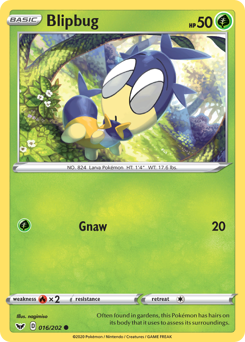
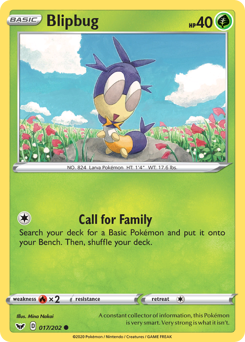
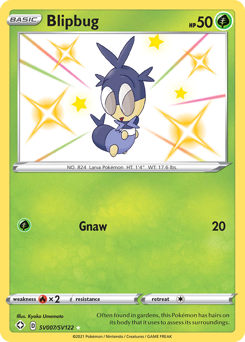
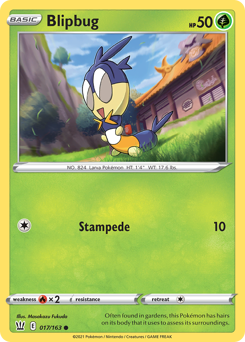
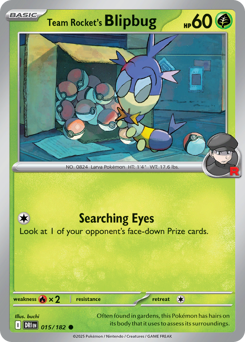
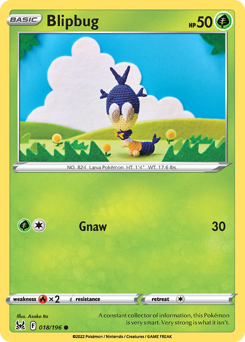
The Evolution Path: Levels 10 and 30
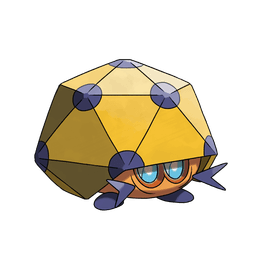
Evolving Blipbug requires no special items or complex mechanics. It evolves into  Dottler exactly when it reaches level 10. You can achieve this quickly by keeping it in your party while battling early-route trainers, as the universal Exp. Share will distribute experience automatically.
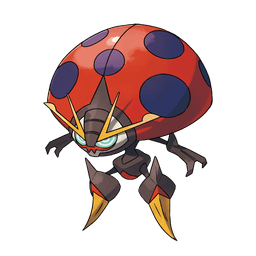
Dottler then evolves into  Orbeetle at level 30. Feeding Dottler a few Medium or Large Exp. Candies obtained from Max Raid Battles will instantly push it to this threshold. If you cancel the evolution by pressing 'B', you can trigger it again by leveling Dottler up one more time.
Because Blipbug has extremely low base stats and a limited movepool consisting entirely of Struggle Bug and Infestation, keeping it out of direct combat is the safest leveling strategy. Rely on party experience until it becomes Dottler and gains access to Light Screen and Reflect.
Competitive Verdict: 5/10 Utility Lead
Once fully evolved into Orbeetle, the line settles into a highly specific competitive role: utility lead and Sticky Web setter. We rate Orbeetle a 5/10. It excels at controlling the pace of the game in lower tiers (like NU or PU), but completely falls apart in standard OU or VGC formats.
Orbeetle operates best on hyper offense teams that desperately need speed control. By setting up Sticky Web, it ensures your slower wallbreakers can outspeed the opponent's grounded Pokémon. Access to U-turn allows it to pivot out immediately after setting hazards, preserving momentum.
However, Orbeetle is severely outclassed by other Sticky Web setters in higher tiers.  Ribombee offers significantly higher base speed and a better defensive typing, while
  Galvantula provides offensive pressure with Thunder. Orbeetle's base 80 Speed leaves it vulnerable to fast Taunt users, completely shutting down its hazard-setting role.
Honest Pros and Cons of the Orbeetle Line
Using the fully evolved form of Blipbug requires building around its distinct advantages and glaring flaws. It is not a plug-and-play Pokémon.
- Pro: Excellent Utility Movepool. Access to Sticky Web, Reflect, Light Screen, Recover, and U-turn gives it all the tools needed to support a team.
- Pro: Frisk Ability. Revealing the opponent's held item upon entry provides immediate, high-value scouting information, especially against choice-locked attackers.
- Con: Terrible Defensive Typing. Bug/Psychic is weak to Stealth Rock and takes super-effective damage from common Ghost, Dark, Fire, Flying, Bug, and Rock attacks.
- Con: Passive Presence. With a low Special Attack stat, Orbeetle invites setup sweepers in. Opponents can easily use Swords Dance or Nasty Plot while Orbeetle sets screens.
These traits make Orbeetle highly situational. It thrives when the opponent lacks rapid hazard removal, but becomes dead weight against teams carrying Heavy-Duty Boots or fast Defoggers like  Corviknight.
Who Should Use Orbeetle?
Orbeetle is a solid draft choice for players in lower-tier draft leagues who need a reliable screen setter and speed controller in a single slot. It pairs exceptionally well with slow, heavy-hitting setup sweepers like  Bisharp or
  Aggron, who capitalize on the speed drops caused by Sticky Web.
Conversely, players looking for a bulky pivot or a late-game sweeper should avoid the Blipbug line entirely. Its offensive stats cannot secure crucial knockouts, and its typing prevents it from absorbing repeated hits. If your team already struggles against Ghost-types like  Dragapult or Dark-types like Knock Off users, adding Orbeetle will only compound that weakness.
For standard ranked laddering, stick to Ribombee or  Shuckle for hazard setting. Reserve Orbeetle for specific lower-tier hyper offense builds where its access to Frisk and U-turn creates specific tactical advantages.
Optimal Moveset and EV Spread
To maximize the final evolution's potential, you must invest entirely in its survivability and speed. A Timid nature with 252 HP and 252 Speed EVs is mandatory to outspeed mid-tier threats and guarantee at least one layer of hazards.
Equip Heavy-Duty Boots to negate Stealth Rock damage, which otherwise strips away 25% of its health upon entry. The standard movelet includes Sticky Web, U-turn, Recover, and either Psychic or Struggle Bug. Psychic prevents you from being completely walled by Poison-types, while Struggle Bug lowers the opponent's Special Attack, buying more turns for your teammates.
If running a dual-screens set, replace Sticky Web and Recover with Light Screen and Reflect, and swap the held item to Light Clay to extend the screen duration to eight turns.
EVOLUTION CHAIN
SPRITE GALLERY
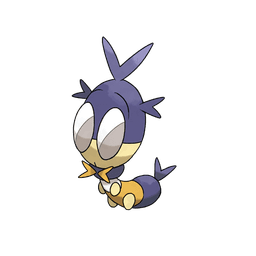 OFFICIAL ARTWORK
 OFFICIAL SHINY
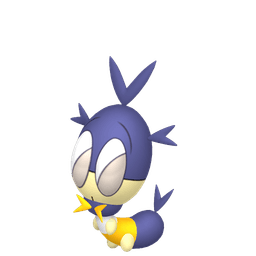 HOME 3D
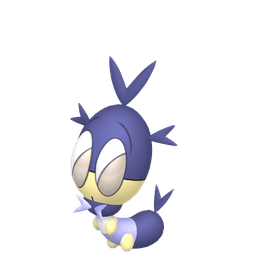 HOME 3D SHINY
 FRONT
FRONT FRONT SHINY
 BACK
BACK BACK SHINY
 ANIMATED
 ANIMATED SHINY
Related Pokémon guides
More Evolution Paths
Common Questions About Blipbug's Evolution
Does Blipbug need an evolutionary stone or item to evolve?
No. Blipbug evolves purely by gaining experience. It requires no evolutionary stones, held items, or specific time-of-day mechanics to reach its Dottler or Orbeetle forms.
Can Dottler evolve earlier than level 30?
No, level 30 is the absolute minimum requirement for Dottler to evolve into Orbeetle. You cannot speed up the process with items, though using Exp. Candies will instantly grant the required levels.
What is the best ability for Orbeetle?
Frisk is Orbeetle's best ability for competitive play. Identifying the opponent's held item upon switching in provides crucial scouting data, allowing you to predict choice-locked attacks or identify heavy-duty boots.
Is Gigantamax Orbeetle still competitively viable?
Gigantamax Orbeetle is only usable in older formats like Sword and Shield unrestricted tiers. Its G-Max move, G-Max Gravitas, sets Gravity, which pairs well with inaccurate moves like Hypnosis, but the mechanic is banned in standard Generation 9 play.