Mythical Pokémon
Mythical Pokémon are event-exclusive creatures officially separated from standard Legendaries by their requirement of external distributions rather than in-game encounters.  Arceus dictates the competitive metagame in Scarlet and Violet Ubers with its Multitype ability. Mew and
  Jirachi serve as highly versatile utility options in lower competitive tiers.
The Best Mythical Pokémon for Your Needs
Selecting the optimal Mythical Pokémon depends entirely on the format and desired role. Competitive performance strictly follows Smogon tiering, while collection value relies on distribution history.
- Arceus: The absolute premier choice for the SV Uber tier, utilizing Multitype to adapt to any offensive or defensive requirement.
- Mew: The definitive hazard setter for SV UU, leveraging a vast movepool to disrupt opponents with Taunt and Will-O-Wisp.
- Jirachi: A specialized pivot in SV RU, generating momentum through U-turn and forcing status conditions with Serene Grace.
 Deoxys: The ultimate collector's trophy for players utilizing the Pokémon GO EX Raid system or legacy hardware.
 Celebi: A lore-heavy addition for completionists tracking down the original GS Ball distribution mechanics.
1. Arceus
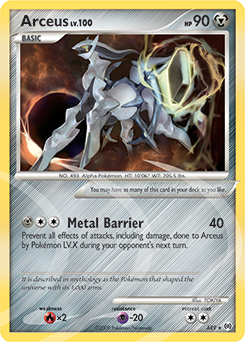
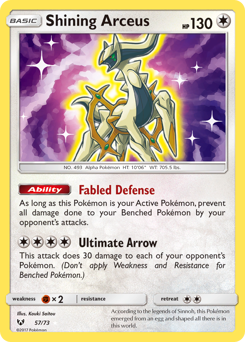
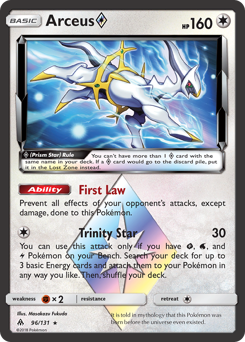
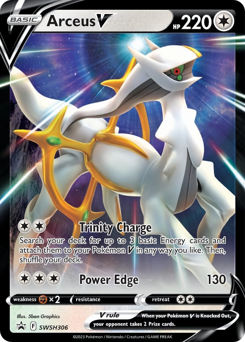
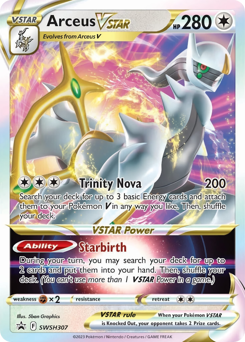
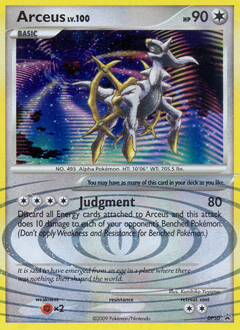
In Pokémon Scarlet and Violet, Arceus dictates the pace of the Uber tier with a 27.3% usage rate. Its Multitype ability allows it to adapt its typing to counter specific metagame threats seamlessly. Players heavily rely on the Silk Scarf combined with Swords Dance and Extreme Speed to execute late-game sweeps.
Alternative competitive moves include Shadow Claw, Earthquake, and Recover to maintain longevity against bulky teams. Heavy-Duty Boots, Life Orb, Leftovers, or a Lum Berry offer flexible item choices depending on the specific set. Arceus excels when paired with  Koraidon, Zacian-Crowned,
  Kyogre,
  Lunala, or
  Ho-Oh to overwhelm opposing defenses.
Despite its dominance, Arceus faces strict counters from  Dondozo,
  Ursaluna, Calyrex-Ice, Arceus-Water, and
  Kingambit. These specific Pokémon halt its physical sweeps and force immediate switches, requiring careful prediction from the player.
2. Mew
Mew operates effectively in the Smogon SV UU tier, holding a 3.2% usage rate due to its unparalleled utility movepool. The Synchronize ability punishes opponents relying on status conditions by reflecting burns or paralysis. Competitive sets prioritize Stealth Rock, Spikes, Taunt, and Will-O-Wisp to disrupt opposing leads and establish early entry hazards.
Offensive variants utilize Nasty Plot, Draining Kiss, or Misty Explosion, while Thunder Wave provides essential speed control for slower teammates. Item choices like Leftovers, Red Card, Mental Herb, Life Orb, or Focus Sash dictate its specific role on the field.  Greninja,
  Slither Wing,
  Iron Jugulis,
  Lokix, and
  Mimikyu serve as excellent partners that capitalize on Mew's hazard support.
Mew struggles against fast physical attackers and dedicated hazard removers.  Weavile,
  Conkeldurr,
  Mandibuzz, and opposing Lokix act as hard counters, easily breaking through its defenses before it can set up multiple layers of Spikes.
3. Jirachi
Jirachi finds its specialized place in the SV RU tier with a 12.4% usage rate, heavily weaponizing the Serene Grace ability. This ability doubles secondary effect chances, making Iron Head and Body Slam incredibly disruptive through constant flinches and paralysis. U-turn allows Jirachi to pivot out of unfavorable matchups while dealing chip damage.
Support sets leverage Stealth Rock, Encore, Healing Wish, Wish, and Trick to cripple defensive walls or heal battered teammates. Players equip Leftovers, Choice Scarf, Power Herb, Eject Button, or a Rocky Helmet to maximize its utility or momentum generation.  Noivern,
  Krookodile,
  Cyclizar,
  Chesnaught, and
  Entei synergize perfectly with Jirachi's pivoting capabilities.
The Steel/Psychic typing leaves Jirachi vulnerable to common Ground and Fire attacks. Entei,  Torterra,
  Gastrodon, Basculegion-F, and
  Bisharp completely wall its standard attacks and force it to retreat, limiting its effectiveness in specific matchups.
4. Deoxys
Deoxys represents a turning point in how The Pokémon Company handles Mythical distributions. Originally requiring specific physical events to obtain the Aurora Ticket, it later transitioned into standard gameplay. Players could encounter Deoxys directly during the Delta Episode, marking a rare instance of a Mythical losing its event-exclusive status.
In modern ecosystems, Deoxys heavily populates Pokémon GO through limited-time EX Raids. This distribution method forces players to coordinate locally, maintaining the creature's rarity while modernizing the acquisition process. Transferring Deoxys through Pokémon HOME remains a strict requirement for National Pokédex completion.
5. Celebi
Celebi established the template for lore-integrated Mythical Pokémon as the voice of the forest. The original distribution required Japanese players to obtain the GS Ball via mobile phone adapters for Pokémon Crystal. This physical-digital hybrid event set a precedent for future generation distributions.
Modern players access Celebi primarily through Special Research quests in Pokémon GO. These narrative-driven tasks require weeks of gameplay, perfectly mirroring Celebi's lore as a time-traveling entity that only appears under specific conditions.
Quick Tier List: Mythical Pokémon Viability
This tier list evaluates the entities based strictly on their Smogon SV performance and overall mechanical utility across modern formats.
- S-Tier: Arceus (Uber dominance, unmatched versatility with Multitype).
- A-Tier: Mew (UU staple, premier hazard setter with Synchronize).
- B-Tier: Jirachi (RU momentum generator, relies heavily on Serene Grace flinches).
- C-Tier: Deoxys, Celebi (Currently restricted to collection and lore purposes, lacking defined SV tier data).
Methodology
This ranking relies strictly on Smogon SV usage statistics and tier placements. Arceus secures the top position due to its 27.3% usage in Ubers. Mew and Jirachi follow based on their established roles in UU and RU. Deoxys and Celebi are evaluated on their historical distribution rarity and modern availability via Pokémon GO.
The Definitive Guide to Mythical Pokémon: What Sets Them Apart?
The Pokémon Company officially classifies a Pokémon as Mythical based on its distribution method, strictly separating them from standard Legendary Pokémon. Legendary Pokémon are encountered through natural in-game progression, whereas Mythical Pokémon historically required external events, physical tickets, or specific real-world downloads. This classification clarifies their exclusion from standard Pokédex completion requirements in earlier generations.
Common misconceptions surround specific rare Pokémon.  Phione and
  Type: Null are not considered Mythical despite their unique circumstances. Phione breeds from
  Manaphy but cannot evolve into it, and lacks the standard 600 Base Stat Total associated with the classification. The term 'Mythical Pokémon' officially replaced older, less precise designations like 'event-exclusive Legendary' to standardize the franchise's nomenclature.
A Chronicle of Rarity: Distribution Across Generations
Early distribution methods in Generations 1 through 3 relied entirely on physical events. Players obtained Mew via the ' Mewtwo's Island' tour, Celebi through the GS Ball in Japanese Crystal, and Jirachi using the Colosseum Bonus Disc. These physical barriers made obtaining a complete Pokédex virtually impossible for rural players.
Generations 4 through 6 shifted toward Wi-Fi and online Mystery Gift events. This era introduced  Darkrai via the Member Card,
  Shaymin via Oak's Letter, alongside
  Genesect,
  Diancie,
  Hoopa, and
  Volcanion. Generations 7 and 8 integrated quests and special items, offering
  Magearna via QR Code,
  Zeraora via Max Raid Battles, and
  Zarude through cinema distributions.
Modern titles completely evolved this approach. The Scarlet and Violet DLC introduced  Pecharunt through the 'Mochi Mayhem' epilogue quest, requiring in-game narrative progression rather than a timed download.
  Meltan and
  Melmetal established a unique transfer mechanism strictly linking Pokémon GO to mainline titles.
Beyond the Lore: Gameplay & Competitive Impact
Most Mythical Pokémon share a 600 Base Stat Total, providing balanced stats across all categories. This flat distribution makes them highly versatile but often less specialized than box-art Legendaries in competitive environments. Unique abilities and signature moves heavily define their battle roles, such as Darkrai's Dark Void, Shaymin-Sky's Serene Grace combined with Seed Flare, and  Marshadow's Spectral Thief.
Official Video Game Championship (VGC) formats and standard Battle Spot rules strictly ban Mythical Pokémon. This exclusion ensures competitive fairness, as their event-exclusive nature restricts access for newer players. They remain confined to specific Smogon tiers, casual battles, and restricted event formats.
In casual gameplay, Mythical Pokémon serve as the ultimate endgame goals. Completing the National Pokédex heavily relies on securing these rare creatures. Specific in-game events, such as the Delta Episode, reward players with powerful assets that trivialize post-game content.
The Tapestry of Tales: Lore and Mythology
Mythical Pokémon carry immense cosmic significance within the franchise's narrative. Arceus stands as the creator of the universe, shaping the world with its thousand arms. Mew functions as the genetic ancestor of all Pokémon, containing the DNA of every known species, which explains its ability to learn any Technical Machine.
Several Mythicals act as guardians or benevolent figures. Celebi serves as the voice of the forest, traveling through time to protect nature. Jirachi grants wishes during the Tanabata festival, waking only seven days every millennium. Manaphy rules as the prince of the sea, bonding with those who discover its egg.
Other Mythicals heavily interact with human civilization or share artificial origins.  Victini guarantees victory to any trainer who wields it, Diancie creates diamonds instantly, and Hoopa manipulates space with its rings. Magearna represents a purely artificial origin, created by human hands centuries ago. These designs connect to real-world concepts, such as Genesect mirroring ancient insects and Zarude drawing inspiration from baboons.
The Collector's Conundrum: Challenges and Triumphs
Achieving a 'Living Dex' that includes all Mythical Pokémon remains the hardest challenge in the franchise. Their limited-time, event-exclusive distributions force players to wait years for re-releases. The concept of 'shiny locking' further complicates collection, as developers intentionally prevent most Mythical Pokémon from generating as shiny during encounters.
Trading for Mythical Pokémon carries significant risks. Players must carefully identify legitimate Pokémon versus hacked ones, often requiring video proof of the original redemption. Hacked Pokémon can result in online bans if used in restricted formats or placed in the Global Trade System.
Cross-game transfers using services like Pokémon HOME and Pokémon Bank introduce additional complexities. Moving older Mythicals across generations, such as the original Mew from the Generation 1 Virtual Console, requires specific steps and verified hardware to ensure compatibility with modern titles.
Mythicals in the Modern Era & Future Prospects
Upcoming titles like Pokémon Legends: Z-A (2025) and current games like Scarlet and Violet indicate a massive shift in distribution models. The 'Mochi Mayhem' epilogue quest for Pecharunt proves that developers now prefer narrative-driven, in-game acquisitions over empty Mystery Gift menus. This approach rewards gameplay rather than calendar awareness.
Pokémon GO heavily dictates modern Mythical access. Meltan requires transferring Pokémon to specific titles, while EX Raids and Special Research quests provide structured paths to Mew, Celebi, Jirachi, Hoopa, and Shaymin. Pokémon Legends: Arceus previously integrated Manaphy, Darkrai, and Shaymin directly into post-game encounters based on save data.
The future of Mythical Pokémon points toward deeper narrative integration. As the franchise moves away from time-limited physical events, players can expect more robust side quests. This evolving model ensures that these rare creatures remain central to the overarching lore without frustrating completionists.
- Pokémon
- Arceus
- Type
- Normal
- Total
- 720
- Pokémon
- Mew
- Type
- Psychic
- Total
- 600
- Pokémon
- Celebi
- Type
- Psychic, Grass
- Total
- 600
- Pokémon
- Jirachi
- Type
- Steel, Psychic
- Total
- 600
- Pokémon
- Deoxys
- Type
- Psychic
- Total
- 600
| Pokémon | Type | Total |
|---|---|---|
| Arceus | Normal | 720 |
| Mew | Psychic | 600 |
| Celebi | Psychic, Grass | 600 |
| Jirachi | Steel, Psychic | 600 |
| Deoxys | Psychic | 600 |
Smogon SV Usage & Tier Data

TYPE EFFECTIVENESS
Related Pokémon guides
Track your Smogon SV usage stats, analyze Base Stat Totals, and build the perfect team using our advanced Pokédex tools.
Explore the PokédexMore from Pokedex.me
Frequently Asked Questions About Mythical Pokémon
What is the exact difference between a Mythical and a Legendary Pokémon?
Mythical Pokémon require external events, physical distributions, or specific real-world downloads to obtain. Legendary Pokémon are encountered naturally through standard in-game progression. The Pokémon Company officially separated these terms to clarify availability and Pokédex completion requirements.
Why is Phione not officially considered a Mythical Pokémon?
Phione's status remains highly debated because it breeds from Manaphy but cannot evolve into it. It lacks the standard 600 Base Stat Total typical of the classification, leading The Pokémon Company to often exclude it from official Mythical promotional lists.
How can I obtain Mythical Pokémon in modern Nintendo Switch games?
Pokémon Scarlet and Violet introduced the Mochi Mayhem epilogue for Pecharunt, requiring gameplay progression. Pokémon GO offers Special Research for Meltan, Mew, and Celebi, which can be transferred via Pokémon HOME. Upcoming titles like Pokémon Legends: Z-A will likely continue this trend.
Are Mythical Pokémon allowed in official VGC competitive play?
Official Video Game Championship formats strictly ban Mythical Pokémon to ensure competitive fairness. Their limited, event-exclusive availability restricts access for many players. They are only permitted in specific Smogon tiers like Ubers, RU, or UU, and casual Battle Spot formats.