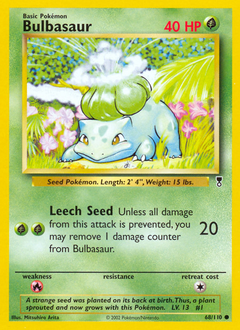
Best Starter in Generation 1
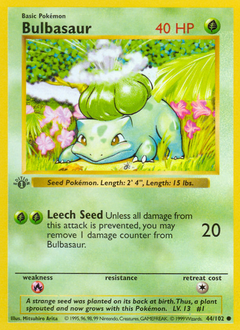
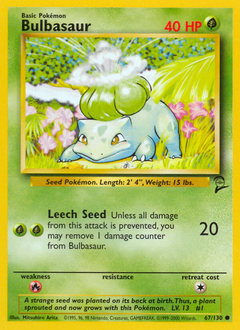
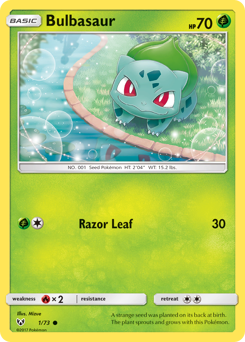
 Bulbasaur is the best Generation 1 starter because its Grass/Poison typing perfectly counters the early-game hurdles of Kanto. It steamrolls Brock and Misty, resists Lt. Surge, and reaches its final evolution quickly.
  Squirtle offers a balanced, HM-friendly alternative, while
  Charmander requires a grueling early grind for a late-game payoff.
Defining 'Best' in Kanto's Original Journey
Assessing the optimal choice in Kanto depends entirely on player priorities. Speed, ease of play, and competitive viability all demand different attributes from a starter. The original mechanics prioritize early-game momentum and type matchups over pure base stats.
The evaluation criteria rest on four pillars. We analyze early-game advantage, gym leader matchups, Elite Four performance, and the availability of alternative team members. These factors dictate the pacing of the entire playthrough.
The iconic Kanto trio consists of Bulbasaur, Charmander, and Squirtle. Their initial Grass, Fire, and Water typings set the trajectory for the first ten hours of gameplay. With Pokémon Legends: Z-A slated for 2025 and the current Scarlet and Violet meta redefining older mechanics, analyzing their foundational Gen 1 performance highlights how starter design has evolved.
The Best Fit For Your Playstyle
- The Path of Least Resistance: Bulbasaur crushes the early game and requires minimal grinding.
- The Consistent Anchor: Squirtle provides a balanced run with essential HM utility.
- The High-Risk Payoff: Charmander demands patience but rewards players with massive late-game damage.
- The Lore Experience:
 Pikachu in Pokémon Yellow offers a unique, fixed narrative challenge.
1. Bulbasaur
Bulbasaur holds the top rank due to its unparalleled early-game dominance. Its Grass typing provides a massive advantage against Brock and Misty. Moves like Vine Whip and Razor Leaf dismantle the first two gyms with zero reliance on alternative catches.
 Venusaur maintains balanced stats and decent bulk throughout the mid-game. It gains access to vital utility moves like Sleep Powder and Growth. This makes it a reliable anchor capable of neutralizing threats before they attack.
It consistently outperforms the Rival's Charmander or  Charmeleon in early encounters. The Grass typing also neuters Lt. Surge, turning a potential roadblock into a straightforward battle. Bulbasaur essentially plays the game on easy mode.
2. Squirtle
Squirtle claims the second spot by offering a solid, manageable early game. Access to Water Gun provides a clear advantage against Brock. The first gym becomes a simple hurdle rather than a grinding check.
 Blastoise delivers reliable performance throughout the mid-game. It excels against Giovanni and Blaine, leveraging its Water typing to sweep Ground and Fire-type opponents. It remains neutral against most other gym leaders, ensuring consistent pacing.
Its high utility as an HM user cements its value. Blastoise can learn Surf, Strength, and Flash. This condenses necessary field moves onto a single, bulky team member, freeing up slots for specialized attackers.
3. Charmander
Charmander ranks third due to significant early-game struggles. The Fire typing creates severe disadvantages against Brock and Misty. Players must rely on alternative early catches like  Mankey or Nidoran to progress without excessive grinding.
The mid-to-late game power spike justifies the initial difficulty. Upon evolving into  Charizard, it gains the Flying type. Access to STAB Fly and potent Fire-type moves like Fire Blast turns it into a primary offensive threat.
Charizard shines during the Elite Four gauntlet. It leverages a high Special stat to melt Erika, Lorelei's  Jynx, and Bruno's
  Onix or Jynx. The payoff is substantial, but the initial investment is steep.
Quick Tier List
- S Tier: Bulbasaur (Optimal progression, best early matchups)
- A Tier: Squirtle (Balanced scaling, excellent HM utility)
- B Tier: Charmander (Hard early game, strong late-game sweeping)
- C Tier: Pikachu (Mandatory in Yellow, severe early disadvantages)
Methodology: How We Ranked The Kanto Starters
This ranking rejects purely anecdotal preferences in favor of mechanical analysis. We evaluate the core Gen 1 engine, focusing on the merged Special stat and type availability. A starter's worth is measured by how much friction it removes from the main campaign.
Early-game advantage carries the highest weight. Kanto's difficulty curve is front-loaded with Rock and Water-type gyms. Starters that natively counter these threats score higher than those requiring immediate supplementary catches.
Elite Four performance and HM utility resolve ties. A starter must contribute during the final gauntlet and navigate the overworld efficiently. We also factor in modern competitive viability to provide a complete picture across different formats.
Strategic Advantages & Pitfalls: Gyms 1-4 Analysis
The first four gyms define the Kanto starter experience. Bulbasaur faces Brock and Misty with absolute impunity. Vine Whip and Razor Leaf exploit double weaknesses, allowing players to stay underleveled and still secure victories.
Squirtle offers a balanced approach. Water Gun handles Brock efficiently, while Misty requires a neutral damage race. Charmander faces inherent difficulty, taking super-effective damage from early Rock and Water-type attacks.
Lt. Surge shifts the momentum. Bulbasaur resists Electric-type attacks, maintaining its lead. Squirtle faces its first major weakness, while Charmander navigates a neutral matchup. Erika provides Charmeleon and Charizard their first major type advantage.
Early-game alternative catches dictate Charmander's viability. Finding a Mankey or Nidoran is mandatory to bypass Brock. Bulbasaur and Squirtle ignore this requirement, allowing players to build their final team at their own pace rather than out of desperation.
Mid-to-Late Game & Elite Four Performance
The final evolutions face a diverse mid-game gauntlet. Venusaur, Charizard, and Blastoise must navigate Koga, Sabrina, Blaine, and Giovanni. Blastoise dominates Blaine and Giovanni with Surf. Charizard struggles against Lorelei but excels against Erika.
The Elite Four tests late-game movepool diversity. Lorelei's Ice and Water-type lineup threatens Venusaur and Charizard. Bruno's Onix and Jynx fall quickly to Surf or Fire Blast. Agatha requires fast, high-damage output to bypass her Ghost and Poison-type threats.
Lance demands specific counters. Blastoise utilizes Ice Beam to systematically dismantle Flying and Dragon-type opponents. Charizard can leverage Fly and Fire Blast, but risks taking massive damage from neutral attacks.
The Rival's diverse team requires the starter to fill specific offensive gaps. Venusaur uses Sleep Powder and Growth to set up sweeps. Charizard relies on raw speed and Fire Blast. Blastoise anchors the team, tanking hits while delivering consistent Surf damage.
Pokémon Yellow: A Unique Starter Experience
Pokémon Yellow fundamentally alters the starter dynamic. Pikachu is the mandatory starter, forcing players into a fixed early-game narrative. The traditional Kanto trio—Bulbasaur, Charmander, and Squirtle—are acquired later through specific NPCs.
Pikachu possesses glaring limits. It gains an early advantage against Misty but hits a massive wall against Brock and Giovanni. Players must catch an  Oddish, Mankey, or Nidoran immediately to progress past the first gym.
Acquiring the original trio requires meeting specific conditions. Bulbasaur demands high friendship with Pikachu. Charmander is handed over by an NPC. Squirtle requires defeating Lt. Surge. This spreads out the team's power spikes across the mid-game.
Competitive Context: Gen 1 Mechanics & Modern Meta (Scarlet/Violet)
When mechanics differ by game, we prioritize the most recent releases. While Pokémon Legends: Z-A (2025) will introduce new variables, current Scarlet and Violet data provides the definitive modern baseline. In the Smogon SV LC tier, Squirtle leads the Kanto trio with a 2.6% usage rate.
Squirtle leverages the Torrent and Rain Dish abilities alongside an Eviolite, Focus Sash, Assault Vest, White Herb, or Heavy-Duty Boots. It sweeps the LC tier using Shell Smash, Ice Beam, Hydro Pump, Substitute, Surf, Tera Blast, Protect, and Wave Crash. It pairs perfectly with  Mienfoo,
  Vullaby, Diglett-Alola,
  Salandit, and
  Timburr.
Bulbasaur sits at a 0.5% usage rate in the SV LC tier. It relies on Chlorophyll or Overgrow, holding a Life Orb, Eviolite, Big Root, Miracle Seed, or Leftovers. Its optimal competitive moveset includes Sludge Bomb, Weather Ball, Solar Beam, Protect, Giga Drain, Growth, Sunny Day, and Sleep Powder. Bulbasaur finds success alongside  Riolu, Charmander,
  Shroodle,
  Glimmet, and Zorua-Hisui.
Charmander sees the lowest usage at 0.4% in the SV LC tier. It uses Solar Power or Blaze, equipped with an Eviolite, Choice Scarf, Air Balloon, Choice Specs, or Life Orb. Charmander applies pressure with Dragon Tail, Flamethrower, Will-O-Wisp, Counter, Overheat, Fire Blast, Weather Ball, and Sleep Talk. It shares synergy with Glimmet, Bulbasaur, Riolu, Mienfoo, and Shroodle.
Returning to original Gen 1 mechanics, the merged Special stat and Speed-based critical hit ratio dictated the meta. Venusaur dominated with Sleep Powder and Growth. Charizard utilized Fire Blast and Fly. Blastoise relied on the consistency of Surf and Ice Beam. Status conditions like Sleep and Paralysis controlled the pace of every battle.
The 'Best' Starter: A Concluding Recommendation Matrix
Bulbasaur stands as the definitive recommendation for beginners seeking an easy playthrough. Its type advantages align perfectly with the steepest parts of Kanto's difficulty curve. It removes the need for early grinding and provides reliable status utility.
Squirtle suits players desiring balanced and consistent progression. It scales linearly, handles mid-game threats efficiently, and condenses HM requirements. It is the safest choice for a well-rounded team composition.
Charmander is strictly for those desiring a challenge with a powerful payoff. It forces players to engage with the catching mechanics immediately. The reward is a late-game powerhouse that excels against specific Elite Four members.
- Pokémon
- Bulbasaur
- Type
- Grass, Poison
- Total
- 318
- Pokémon
- Charmander
- Type
- Fire
- Total
- 309
- Pokémon
- Squirtle
- Type
- Water
- Total
- 314
| Pokémon | Type | Total |
|---|---|---|
| Bulbasaur | Grass, Poison | 318 |
| Charmander | Fire | 309 |
| Squirtle | Water | 314 |
Base Stats & Competitive Data

Related Pokémon guides
Explore our complete database to find the perfect movesets and team synergies for your chosen starter.
View Kanto PokédexExplore the Pokédex
Frequently Asked Questions
Which is the strongest starter for the late game?
Charizard provides the highest raw damage output in the late game. Its access to Fire Blast and Fly allows it to sweep through Erika and specific Elite Four members, contrasting with Venusaur's slower, utility-based approach.
How do the Kanto starters perform in modern competitive play?
In the current Scarlet and Violet LC tier, Squirtle is the strongest choice. It holds a 2.6% usage rate, utilizing Shell Smash and Hydro Pump to sweep teams, outperforming both Bulbasaur and Charmander.
Can you get all three starters in a single playthrough?
You can only acquire all three starters naturally in Pokémon Yellow. You start with Pikachu, and NPCs will gift you Bulbasaur, Charmander, and Squirtle as you progress and meet specific friendship or badge requirements.
Why is Charmander considered the hardest choice?
Charmander takes super-effective damage from early Rock and Water-type gyms. This forces players to catch and train alternative Pokémon like Mankey or Nidoran just to survive the first few hours of the game.