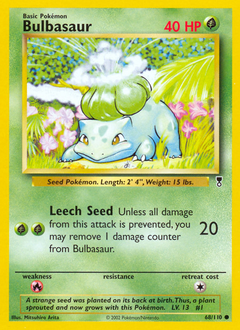
Starter Pokémon
A starter Pokémon is the first partner given to a player at the beginning of main series games, traditionally forming a Grass, Fire, and Water type triangle.  Squirtle ranks as the objectively best early-stage choice due to its Shell Smash access and defensive utility.
  Bulbasaur and
  Charmander follow closely behind for specialized weather-based roles.
Introduction: The Enduring Appeal of Starter Pokémon
A starter Pokémon defines the mechanical foundation of a player's journey. These initial partners traditionally form a Grass, Fire, and Water type triangle. This dictates early-game pacing and type matchup education.
Players form strong attachments to these choices, often building their entire endgame team around them. The initial choice dictates the difficulty curve of the first three gyms in almost every region. This elemental triangle ensures that no single choice is without a direct counter.
Understanding the strategic depth of these Pokémon requires looking past nostalgia. We evaluate their base stats, movepools, and synergy with generational mechanics.
The Best Starter for Your Needs
Choosing the right starter depends entirely on your mechanical goals and the specific game format.
- Squirtle: The premier competitive choice for LC tier players needing a Shell Smash sweeper.
- Bulbasaur: The optimal story-mode pick for Kanto, resisting early gyms while offering Sleep Powder utility.
- Charmander: The high-risk option for Sun teams leveraging Solar Power and Choice Specs.
 Cyndaquil: The fast-paced special attacker for Johto playthroughs requiring immediate offensive pressure.
1. Squirtle
Squirtle dominates the LC tier through pure defensive utility and setup potential. Access to Shell Smash transforms it into a potent sweeper when holding a White Herb or Focus Sash. Players typically run Surf or Hydro Pump for STAB.
Ice Beam and Tera Blast provide essential coverage against Grass-types. Torrent and Rain Dish offer situational longevity alongside Heavy-Duty Boots or an Assault Vest. Substitute and Protect ensure crucial stalling capabilities.
Wave Crash serves as a physical alternative for specific matchups. It pairs exceptionally well with  Mienfoo,
  Vullaby, Diglett-Alola,
  Salandit, and
  Timburr. Electric-types and Grass-types remain its primary counters.
2. Bulbasaur
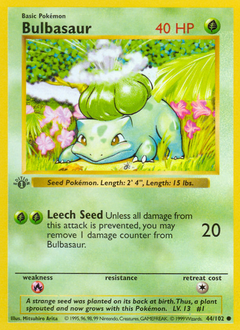
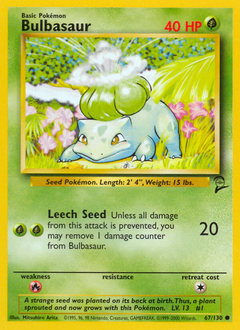
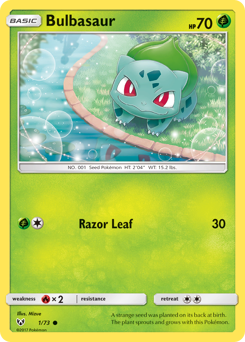
Bulbasaur holds a dedicated niche in the LC tier as a weather abuser. Chlorophyll makes it a terrifying speed threat under Sun conditions, outpacing most unboosted foes. Overgrow provides a reliable damage boost when its health drops.
Competitive sets rely on Sludge Bomb and Solar Beam for massive damage. Weather Ball capitalizes on Sunny Day setups, while Growth boosts its offensive stats further. Giga Drain paired with Leftovers, a Big Root, or a Miracle Seed ensures sustained recovery.
Sleep Powder offers unmatched disruption. It synergizes perfectly with  Riolu, Charmander,
  Shroodle,
  Glimmet, and Zorua-Hisui. Fire-types easily check its sweep potential.
3. Charmander
Charmander operates as a fragile but explosive wallbreaker in the LC tier. Solar Power turns its attacks into devastating blows under Sun, despite the passive damage. Blaze remains a safer alternative for standard play.
A Choice Scarf, Choice Specs, or Life Orb set utilizing Fire Blast, Overheat, and Flamethrower melts through unprepared teams. Weather Ball provides excellent coverage, while Dragon Tail phases out setup sweepers. Will-O-Wisp cripples physical attackers, and Counter punishes physical hits when holding an Eviolite or Air Balloon.
Sleep Talk allows it to absorb status conditions. Glimmet, Bulbasaur, Riolu, Mienfoo, and Shroodle provide excellent support. Water-types and Rock-types stop it completely.
4. Cyndaquil
Cyndaquil relies on high Speed and Special Attack to overwhelm opponents early. It struggles with early-game movepool depth, often relying on basic Fire attacks until higher levels. This forces players to rely heavily on items and over-leveling in Johto.
Its final evolution capitalizes on Eruption for spread damage in double battles. It functions as a pure special sweeper with very little defensive utility. Rock-types and Water-types heavily wall its early progression.
5. Chikorita
 Chikorita faces severe disadvantages against early Johto gyms, specifically struggling against Flying, Bug, and Ghost-types. It functions best as a defensive support pivot rather than a frontline attacker. Players must rely on status conditions and healing to win attrition battles.
Its evolution utilizes dual screens and recovery to outlast opponents. It lacks the offensive pressure of its elemental peers. Fire-types and Flying-types completely shut down its utility.
Quick Tier List
For players looking beyond the top five, this rapid assessment covers the broader starter ecosystem based on final evolution viability.
- S-Tier: Squirtle,
 Greninja,
  Incineroar
 - A-Tier: Bulbasaur, Charmander,
 Rillaboom,
  Meowscarada
 - B-Tier: Cyndaquil,
 Skeledirge,
  Swampert,
  Primarina
 - C-Tier: Chikorita,
 Emboar,
  Meganium,
  Inteleon
Methodology
Rankings stem from base stat distributions, typing synergies, and availability across modern formats like Scarlet and Violet. We analyze competitive usage rates, evaluating hidden abilities and movepool depth.
In-game story performance factors into early-game viability against specific Gym Leaders. We do not factor in anime appearances or subjective design preferences.
Generation I (Kanto): The Originals Who Started It All
 Venusaur offers unmatched bulk and status application in the Kanto region.
  Charizard gains a dual Fire/Flying typing upon its final evolution, granting a crucial ground immunity.
  Blastoise provides reliable special attack and defensive utility across all stages.
Charmander struggles heavily against Brock and Misty, requiring significant grinding or team support. Bulbasaur trivializes the early Kanto gyms, making it the mathematically optimal choice for speedruns. Squirtle provides a balanced middle ground.
These starters maintain high relevance through remakes like Let's Go,  Pikachu! and Let's Go,
  Eevee!. Their Mega Evolutions further cemented their legacy in later generations.
Generation II & III (Johto & Hoenn): Evolving Designs and Strategic Depth
Chikorita requires a defensive playstyle to survive Johto's hostile early gyms. Cyndaquil and  Totodile offer immediate offensive solutions for players wanting a faster pace.
  Typhlosion leverages high speed, while
  Feraligatr dominates with physical bulk and Dragon Dance setups.
Hoenn introduces permanent dual-typings for its final stages.  Sceptile,
  Blaziken, and Swampert redefine competitive team building with their diverse movepools. Swampert's Water/Ground typing leaves it with only one weakness.
Blaziken's Speed Boost ability remains a competitive staple, often requiring bans in standard play. These generations proved starters could be top-tier competitive threats.
Generation IV & V (Sinnoh & Unova): Powerful Evolutions and Narrative Integration
Sinnoh starters boast unique final typings that directly counter each other.  Torterra utilizes Grass/Ground for physical dominance and Earthquake STAB.
  Infernape brings Fire/Fighting speed, and
  Empoleon leverages Water/Steel resistances.
These typings are necessary to counter Champion Cynthia's diverse team. Unova experiences Fire/Fighting fatigue with Emboar, leading to design criticisms.  Samurott provides a balanced, albeit straightforward, pure Water-type option.
 Serperior breaks molds with its Contrary ability, turning Leaf Storm's stat drops into massive special attack buffs. This single ability defines its entire competitive identity.
Generation VI & VII (Kalos & Alola): New Mechanics and Fan Favorites
Greninja dominates the competitive scene through its Protean ability, changing its type before every attack. The Fairy-type introduction severely impacts  Delphox, altering Kalos type matchups and defensive strategies.
  Chesnaught provides a physical walling alternative with Spiky Shield.
Alola starters introduce distinct Z-Moves that bypass standard damage calculations.  Decidueye utilizes Grass/Ghost trapping mechanics, while Primarina leverages Water/Fairy special defense.
Incineroar dominates VGC formats entirely due to Intimidate, Fake Out, and Parting Shot. It remains the most utilized support Pokémon in double battles.
Generation VIII (Galar): Dynamax, Gigantamax, and Regional Identity
Galar starters reflect UK-inspired themes, with  Cinderace operating as a high-speed striker. Rillaboom acts as a percussive powerhouse, and Inteleon functions as a precise special sniper. Dynamax and Gigantamax forms amplify their strategic utility by granting secondary effects to their attacks.
Cinderace's Libero ability functions identically to Protean, dictating the Galar singles metagame. Rillaboom's Grassy Surge provides passive healing and boosts its priority Grassy Glide.
Their pure typings require careful team building for the Gym Challenge. They rely heavily on their Hidden Abilities to maintain competitive relevance.
Generation IX (Paldea) & Legends Z-A: Terastallization and Open-World Strategy
Scarlet and Violet introduce Terastallization, allowing starters to change their defensive profile and boost STAB attacks. Meowscarada utilizes Protean for immediate offensive shifts and guaranteed critical hits with Flower Trick. Skeledirge uses Unaware to ignore opponent stat boosts, making it an incredible defensive wall.
 Quaquaval acts as a snowballing physical sweeper, boosting its speed with every Aqua Step. Their designs fit perfectly into the open-world exploration of Paldea.
Pokémon Legends: Z-A (2025) will reintroduce Mega Evolutions. This mechanic will directly shift the viability of returning Kalos starters in upcoming formats, potentially redefining their competitive tiers.
Beyond the Generations: What Makes a Starter Truly Great?
A great starter requires a cohesive design, balanced stats, and a potent final evolution. Secondary typings enhance a starter's unique utility and defensive profile. Pure typings often fall behind unless carried by exceptional abilities.
Fire/Fighting fatigue and weak defensive stats remain common design criticisms from the player base. Hidden Abilities dictate long-term competitive viability far more than base stats.
Mega Evolutions and regional gimmicks often provide the necessary power creep to keep older starters relevant. A starter is only as good as the mechanics that support it.
Conclusion: The Enduring Legacy and Future of Starter Pokémon
The starter choice remains the most fundamental decision in any playthrough. Nostalgia and strategic depth keep these Pokémon relevant across decades of shifting metagames. They serve as the player's introduction to complex mechanics.
Future designs will likely continue integrating new regional mechanics and dual-typings. Players will always build their first strategies around these initial partners.
The anticipation for future trios drives the ongoing discussion and tiering of these iconic characters.
- Pokémon
- Bulbasaur
- Type
- Grass, Poison
- Total
- 318
- Pokémon
- Charmander
- Type
- Fire
- Total
- 309
- Pokémon
- Squirtle
- Type
- Water
- Total
- 314
- Pokémon
- Chikorita
- Type
- Grass
- Total
- 318
- Pokémon
- Cyndaquil
- Type
- Fire
- Total
- 309
| Pokémon | Type | Total |
|---|---|---|
| Bulbasaur | Grass, Poison | 318 |
| Charmander | Fire | 309 |
| Squirtle | Water | 314 |
| Chikorita | Grass | 318 |
| Cyndaquil | Fire | 309 |
Competitive Usage Stats

Related Pokémon guides
Analyze complete movepools, hidden abilities, and competitive stats for every starter Pokémon.
View Full Pokédex DataRelated Tier Lists
Frequently Asked Questions About Starter Pokémon
Which starter Pokémon is the strongest alternative to Squirtle?
Bulbasaur is the strongest alternative. It provides excellent weather control with Chlorophyll and Sleep Powder disruption, making it a top-tier choice for Sun teams, whereas Squirtle excels in Shell Smash sweeping.
Is Charmander better than Bulbasaur in the early game?
No. Charmander struggles significantly against the first two Rock and Water-type gyms in Kanto. Bulbasaur has a massive type advantage against early leaders, making it the most efficient choice for story progression.
How does Terastallization affect starter Pokémon in Scarlet and Violet?
Terastallization allows starters to change their base typing defensively or amplify their STAB damage offensively. This mechanic lets Pokémon like Meowscarada shed its bug weakness or boost its Dark-type attacks for guaranteed knockouts.
Why do starter Pokémon always follow the Grass, Fire, and Water typing?
This specific elemental triangle acts as a perfect rock-paper-scissors tutorial for new players. It instantly teaches type advantages, weaknesses, and resistances without overwhelming the player with complex secondary typings early on.