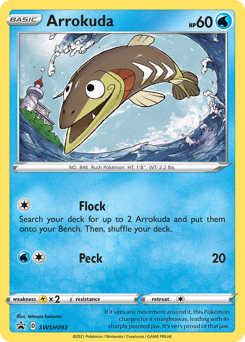
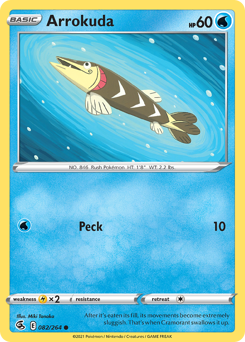
The Evolution Method
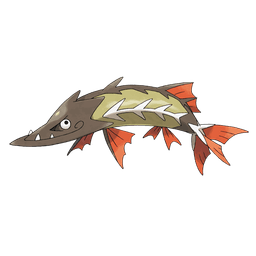
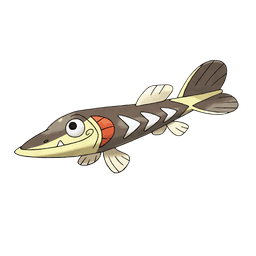
Evolving Arrokuda into  Barraskewda requires reaching level 26. There are no secondary conditions. You do not need a Water Stone, high friendship, or specific weather conditions, despite its heavy reliance on rain in competitive play.
In Pokémon Sword and Shield, you can catch  Arrokuda at Route 2 or the Motostoke Riverbank. In Pokémon Scarlet and Violet, it spawns abundantly in the rivers of Paldea's South Province. Catching one in the mid-20s allows you to trigger the evolution almost immediately using a single Rare Candy or a handful of Exp. Candies.
If you plan to use Barraskewda competitively, it is highly recommended to catch an Arrokuda with the Swift Swim ability rather than Propeller Tail. While Propeller Tail ignores redirection moves like Follow Me in VGC doubles, Swift Swim dictates Barraskewda's entire identity in singles formats.
Competitive Role: The Rain Sweeper
Once evolved, Barraskewda steps into the role of a premier physical sweeper and offensive pivot. The transition from Arrokuda grants it a massive base 123 Attack and a blistering base 136 Speed. This speed tier naturally outpaces almost the entire unboosted metagame, including fast threats like  Dragapult and
  Chien-Pao.
Barraskewda operates as a strict glass cannon. Its primary function is to equip a Choice Band or Mystic Water, enter the field under rain, and spam Liquidation to break physical walls. The rain boost from Drizzle, combined with Swift Swim doubling its already elite speed, makes it nearly impossible to outspeed without priority moves.
Flip Turn is mandatory on this Pokémon. It allows Barraskewda to deal chip damage and pivot out against unfavorable matchups, such as bulky Water-absorbers. Close Combat provides essential coverage against Steel and Normal types, while Psychic Fangs breaks screens and hits Poison or Fighting types on the switch.
Pros, Cons, and Verdict
Competitive Verdict: 8/10 (Rain Teams) | 3/10 (Standalone)
Barraskewda is a highly polarizing Pokémon. On a dedicated rain team, it is an S-tier sweeper that can dismantle unprepared defensive cores. Its pros include unmatched speed under weather, devastating STAB damage, and excellent momentum control via Flip Turn.
However, its cons are severe. With base 61 HP, 63 Defense, and 60 Special Defense, Barraskewda cannot survive neutral hits from strong attackers. It is highly vulnerable to priority moves.  Rillaboom's Grassy Glide,
  Dragonite's Extreme Speed, or
  Kingambit's Sucker Punch will OHKO it effortlessly.
Furthermore, if you lose your weather setter and the rain stops, Barraskewda loses half its utility. It becomes easily revenge-killed by Choice Scarf users. It also struggles heavily against Rocky Helmet users like  Corviknight or
  Amoonguss, who punish its reliance on contact moves.
Teambuilding Synergies
Building a team around Arrokuda's evolution requires specific support. A Drizzle user is non-negotiable.  Pelipper is the optimal partner, providing reliable rain, pivoting with U-turn, and offering a Ground immunity that Barraskewda appreciates.
Because Barraskewda forces a lot of switches and uses Flip Turn frequently, entry hazards will wear it down quickly. You must pair it with a reliable Rapid Spin or Defog user.  Great Tusk or
  Iron Treads synergize well by clearing Stealth Rock and threatening the Electric types that target Pelipper.
Finally, you need a dedicated answer to bulky Water types like  Dondozo or
  Toxapex, which completely wall Barraskewda's STAB attacks.
  Raging Bolt or
  Zapdos can absorb hits aimed at Barraskewda and retaliate with super-effective Electric moves, creating a balanced offensive core.
EV Training and Nature Selection
Before evolving Arrokuda, you should finalize its Effort Values (EVs) and Nature. The standard spread is completely straightforward: 252 Attack, 252 Speed, and 4 Special Defense. Investing in HP or Defense is mathematically useless due to its inherently low defensive base stats.
Choosing between an Adamant and Jolly nature depends on your format. An Adamant nature maximizes damage output, which is crucial for breaking through physical walls like  Ting-Lu. Under rain, Swift Swim makes an Adamant Barraskewda fast enough to outspeed everything anyway.
However, a Jolly nature is strictly required if you expect to face other Swift Swim users, such as  Floatzel or
  Basculegion, or if you frequently play outside of rain conditions. Jolly ensures you speed-tie or outspeed base 135+ Pokémon in neutral weather, preventing an immediate sweep from the opponent.
EVOLUTION CHAIN
SPRITE GALLERY
 OFFICIAL ARTWORK
 OFFICIAL SHINY
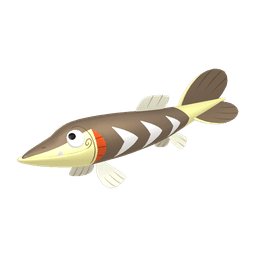 HOME 3D
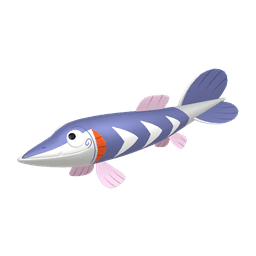 HOME 3D SHINY
 FRONT
FRONT FRONT SHINY
 BACK
BACK BACK SHINY
 ANIMATED
 ANIMATED SHINY
Related Pokémon guides
Competitive Movesets
Frequently Asked Questions
What level does Arrokuda evolve?
Arrokuda evolves into Barraskewda at level 26. There are no other requirements, such as items or time of day, needed to trigger this evolution.
Does Arrokuda need a Water Stone to evolve?
No, Arrokuda does not require a Water Stone. It evolves purely by leveling up to 26. Water Stones are reserved for other Water-types like Shellder or Eevee.
Is Barraskewda good in competitive play?
Yes, but strictly on rain teams. Thanks to its Swift Swim ability, base 123 Attack, and base 136 Speed, it is one of the best physical sweepers in the game when paired with a Drizzle user like Pelipper.
What is the best nature for Arrokuda?
Adamant is the preferred nature for rain teams to maximize damage output. Jolly is recommended if you plan to use it outside of rain or need to outspeed rival Swift Swim users.