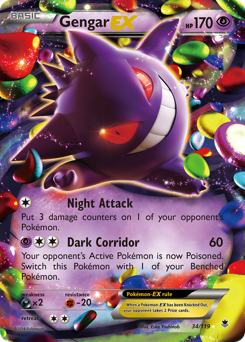
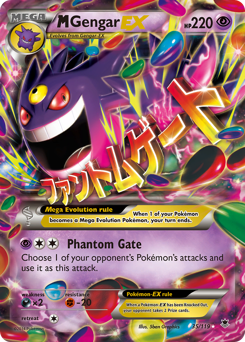
Gengar (Competitive & In-Game)
Yes, but it is highly situational in modern competitive play. In Scarlet and Violet,  Gengar sits in the RU tier as a fragile but fast special attacker. While excellent for story playthroughs, its PvP viability relies heavily on Choice Scarf or Focus Sash to compensate for its extreme frailty.
Verdict
Gengar remains a potent fast attacker but requires careful positioning due to its nonexistent bulk and reliance on prediction.
Rating 7/10 · Tier RU (Scarlet & Violet Singles) · Role : Special Sweeper / Fast Pivot
Strengths
- High base Speed outpaces many unboosted threats in the RU tier.
- Excellent dual STAB coverage with Sludge Wave and Shadow Ball.
- Utility options like Trick and Will-O-Wisp cripple defensive counters.
- Automatically absorbs Toxic Spikes upon entering the field.
Weaknesses
- Extremely frail; crumbles to almost any neutral physical attack.
- Cursed Body is highly inconsistent compared to its former Levitate ability.
- Reliant on Focus Blast for Dark- and Steel-types, which has notoriously poor accuracy.
- Vulnerable to common priority moves that bypass its high Speed.
Gengar Base Stats & Matchup Data

BEST COUNTERS


SIZE COMPARISON
SPRITE GALLERY
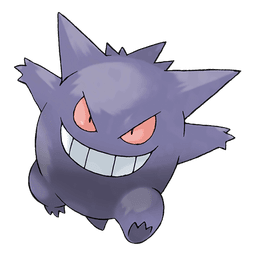 OFFICIAL ARTWORK
 OFFICIAL SHINY
 HOME 3D
 HOME 3D SHINY
 FRONT
FRONT FRONT SHINY
 BACK
BACK BACK SHINY
 ANIMATED
 ANIMATED SHINY
Tier Placement & Competitive Role in Scarlet/Violet
In the current Scarlet and Violet competitive landscape, Gengar has settled into the RU (Rarely Used) tier, maintaining a solid 10.9% usage rate. Its role is strictly defined by its stat distribution: it operates as a fast special sweeper and offensive pivot. With exceptional Special Attack and Speed, it forces immediate pressure on the opponent, but its abysmal defensive stats mean it cannot switch into direct attacks safely.
The defining aspect of modern Gengar is navigating its frailty. Since losing its Levitate ability in older generations, it is now grounded and vulnerable to all entry hazards unless holding Heavy-Duty Boots or an Air Balloon. Its current ability, Cursed Body, offers a 30% chance to disable a move that hits it. While this can occasionally clutch a game by locking an opponent out of their primary STAB attack, it is far too inconsistent to rely on defensively. You must play Gengar as a pure glass cannon, relying on aggressive predictions and pivoting to get it onto the field safely.
Despite these flaws, Gengar excels at forcing switches. Its Ghost/Poison typing gives it a unique offensive profile, and simply switching Gengar into the battle automatically clears Toxic Spikes from your side of the field. This passive utility makes it a valuable asset for offensive teams that cannot afford to run a dedicated hazard remover, allowing it to support the team while threatening massive damage.
Optimal Competitive Sets: Choice Attacker & Status Sweeper
The Choice Scarf / Choice Specs Pivot
This is the most straightforward and consistent way to play Gengar in the RU tier. By equipping a Choice Scarf, Gengar outspeeds the entire unboosted metagame and most Dragon Dance or Quiver Dance sweepers after a single boost. If your team already has speed control, Choice Specs turns it into a terrifying wallbreaker.
- Shadow Ball: The primary Ghost-type STAB, offering excellent neutral coverage and a chance to drop Special Defense.
- Sludge Wave: The strongest Poison-type STAB available, punishing Fairy- and Grass-types severely.
- Focus Blast: Absolutely mandatory coverage to hit Dark- and Normal-types that resist or ignore Ghost attacks, despite its frustrating 70% accuracy.
- Trick: The secret weapon of this set. Using Trick allows Gengar to permanently cripple defensive walls by locking them into a single move, trading away its Choice item when sweeping is no longer required.
The Nasty Plot & Hex Sweeper
For teams that prefer setup sweepers, Gengar can run a highly effective status-punishing build. This set typically holds Heavy-Duty Boots to ignore hazard damage or an Air Balloon to manufacture a temporary Ground immunity, mimicking its old Levitate days.
- Nasty Plot: Doubles Gengar's Special Attack in a single turn, allowing it to break through bulkier teams.
- Will-O-Wisp: Burns the target, cutting their physical damage output in half and providing Gengar a sliver of artificial physical bulk.
- Hex: A Ghost-type STAB that doubles in base power if the target is afflicted by a status condition. When combined with Will-O-Wisp and a Nasty Plot boost, Hex will outright delete almost any Pokémon that does not resist it.
- Sludge Wave: Secondary STAB to hit targets that are immune to Ghost or immune to burns (like Fire-types).
Alternatively, a Focus Sash can be used on the Nasty Plot set to guarantee survival against one fatal hit, ensuring Gengar gets at least one setup turn or one crucial attack off against a faster threat.
Best Matchups & Teammate Synergies
Gengar shines when paired with teammates that can cover its glaring defensive weaknesses and safely pivot it into favorable matchups. In the RU tier,  Krookodile is arguably Gengar's best partner. Krookodile provides crucial Dark- and Ground-type coverage, immune to the Psychic attacks aimed at Gengar, while Gengar effortlessly absorbs the Fighting- and Fairy-type moves that threaten Krookodile. This offensive core forces opponents into difficult prediction games.
Pivoting support is essential for a glass cannon.  Noivern serves as an excellent teammate, utilizing its high speed to force switches and bringing Gengar onto the field safely via pivoting moves. Noivern also provides an immunity to Ground-type attacks, which Gengar desperately needs since losing Levitate.
Defensive backbones are required to absorb the hits Gengar cannot take.  Chesnaught and
  Empoleon form a phenomenal defensive pairing alongside it. Chesnaught can absorb heavy physical blows and set up entry hazards, chipping opponents down so Gengar's Shadow Ball can secure the knockout. Empoleon provides elite special bulk and a resistance to Psychic and Flying attacks, acting as a reliable switch-in when Gengar is threatened by faster special attackers.
Finally,  Bisharp acts as a fantastic secondary offensive partner. Bisharp thrives on physical pressure and priority, punishing the special walls that attempt to tank Gengar's assaults. Together, they overwhelm balanced teams by attacking from both ends of the defensive spectrum.
Honest Weaknesses & Hard Counters
You cannot evaluate Gengar without acknowledging its extreme fragility. Any strong neutral physical attack will likely score a one-hit knockout. This makes Gengar incredibly vulnerable to priority moves, which bypass its elite Speed stat entirely. Pokémon like  Mimikyu (with its Ghost-type priority) and Bisharp (with Dark-type priority) are massive threats. Gengar cannot stay in against them unless it is holding an unbroken Focus Sash.
Dedicated special walls and specific typings also stop Gengar in its tracks. Alolan Muk is a nightmare matchup; its Poison/Dark typing makes it immune to Psychic, resistant to Ghost, and immune to being poisoned by Sludge Wave. Alolan Muk easily absorbs any attack Gengar throws at it and threatens an immediate knockout in return.  Umbreon functions similarly, using its massive Special Defense to shrug off Focus Blast and stalling Gengar out with healing.
Hisuian  Goodra is another insurmountable wall for standard Choice Scarf Gengar. With its colossal Special Defense and Dragon/Steel typing, Hisuian Goodra easily tanks Shadow Ball and Sludge Wave. Unless Gengar has successfully set up a Nasty Plot, it cannot break through this defensive behemoth.
Finally, multi-hit moves completely bypass Gengar's reliance on the Focus Sash item.  Maushold is a premier example of this threat. Its signature multi-hit Normal-type attack will break the Focus Sash on the first hit and knock Gengar out on the subsequent strikes, rendering the item completely useless and removing Gengar from the match instantly.
In-Game Playthroughs: Scarlet/Violet & Legends Z-A
While competitive PvP requires careful prediction, Gengar is an absolute monster in story playthroughs. In Pokémon Scarlet and Violet, NPC trainers rarely use optimized EV spreads or hold competitive items. This allows Gengar's naturally high Speed and Special Attack to dominate. You can easily sweep entire Gyms and Elite Four members simply by clicking Shadow Ball or Sludge Wave, as very few story opponents will survive a single hit or outspeed it.
Looking ahead to the highly anticipated Pokémon Legends: Z-A in 2025, Gengar's stock is expected to rise significantly. The confirmed return of Mega Evolution means that Mega Gengar—historically one of the most broken and dominant Pokémon ever created due to its Shadow Tag ability—will likely be returning to the franchise. Players preparing for Legends Z-A should absolutely secure a strong Gengar now.
For in-game purposes, you do not need complex strategies like Trick or Will-O-Wisp. A pure all-out attacker moveset with a boosting item like a Spell Tag or Poison Barb is more than enough to carry your team through the main narrative of any modern Pokémon game.
Avoid Gengar If... & Best Alternatives
You should avoid adding Gengar to your competitive team if you are looking for a reliable spinblocker. While its Ghost typing technically prevents opponents from using Rapid Spin to clear hazards, Gengar is far too frail to actually switch into a Rapid Spin safely if the opponent predicts it and uses a coverage move instead. It cannot function as a defensive anchor for hazard-stacking teams.
Furthermore, do not use Gengar if your team is already incredibly weak to priority attacks. If your squad lacks bulky defensive pivots and relies entirely on fast, frail attackers, adding Gengar will only compound your weakness to priority sweepers like Bisharp or Mimikyu.
If you need a Ghost-type attacker but require more safety and guaranteed setup, Mimikyu is the superior alternative. While Mimikyu is a physical attacker rather than a special one, its Disguise ability acts as a free substitute, guaranteeing that it survives at least one attack. This allows Mimikyu to safely set up a Swords Dance without relying on the easily-broken Focus Sash, making it a much safer win condition against offensive teams.
Related Pokémon guides
Competitive Guides & Tier Lists
Frequently Asked Questions About Gengar
Is Gengar better than Mimikyu?
It depends on your team's needs. Gengar is a much faster, harder-hitting special attacker that excels at revenge killing. Mimikyu is a physical attacker that offers guaranteed setup and safety thanks to its Disguise ability, making Mimikyu generally safer against heavy offense.
What is the best competitive moveset for Gengar?
The most reliable RU set runs Shadow Ball, Sludge Wave, Focus Blast, and Trick, holding a Choice Scarf to outspeed the metagame. Alternatively, a wallbreaking set using Nasty Plot, Hex, Will-O-Wisp, and Sludge Wave with Heavy-Duty Boots is excellent against slower teams.
What are Gengar's biggest weaknesses?
Gengar's primary weaknesses are its abysmal physical defense and vulnerability to priority moves. Pokémon like Bisharp and Mimikyu easily bypass its high Speed, while dedicated special walls like Hisuian Goodra, Umbreon, and Alolan Muk completely absorb its attacks.
Is Gengar good for the Scarlet and Violet story?
Yes, Gengar is fantastic for the main story. Its massive Special Attack and Speed allow it to outspeed and one-shot most NPC Pokémon without needing complex strategies, making it a highly efficient cleaner for gyms and the Elite Four.
Pokedex.me is an unofficial fan site, not affiliated with Nintendo, Game Freak or The Pokémon Company. Competitive takes reflect observed usage (Smogon SV stats).