Best Rock-Type Pokémon
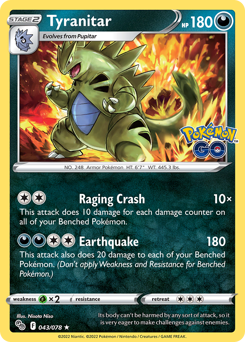
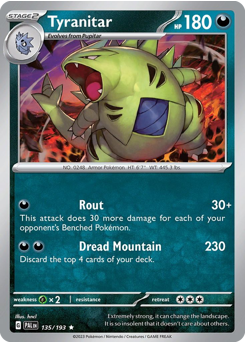
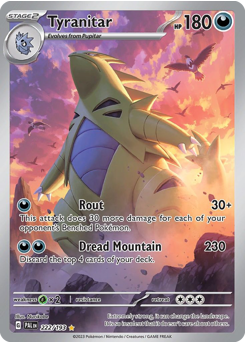
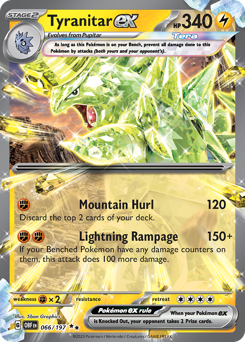
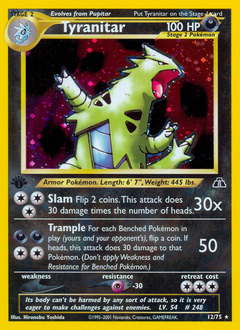
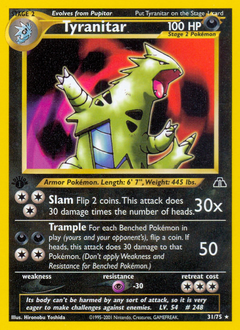
 Tyranitar stands as the best Rock-type Pokémon due to its Sand Stream ability, immense Special Defense boost in sandstorms, and dominant presence in the SV OU tier. Its massive base stats allow it to function as a premier wallbreaker or special tank.
  Iron Boulder and
  Terrakion follow closely for pure offensive sweeping potential.
Introduction: What Makes a Rock-Type Pokémon Truly Best?
Assessments of the best Pokémon are inherently subjective and depend entirely on diverse perspectives, ranging from competitive Smogon formats to casual playthroughs. Evaluating Rock-types requires looking beyond raw Defense stats to examine their competitive viability, in-game utility, and specific niches. Players must weigh their base stat distribution against their available movepools.
Rock-types naturally boast high physical Attack and Defense, often synergizing with Sandstorm conditions for a crucial Special Defense boost. They suffer from common, easily exploitable weaknesses to Water, Grass, Fighting, Ground, and Steel attacks. Key evaluation criteria include signature abilities, beneficial dual typings, and specific roles like dedicated walls or fast sweepers.
Access to reliable STAB moves like Stone Edge, Rock Slide, and Accelerock dictates their offensive pressure. Upcoming titles like Pokémon Legends: Z-A will likely shift these dynamics with new regional mechanics. Current Scarlet and Violet mechanics heavily favor those who can Terastallize to shed their native defensive flaws.
The Best Pick For Your Playstyle
Choosing the right monster depends entirely on the format and team composition. A Pokémon dominating the OU tier might struggle in a specialized Trick Room setup. Players must align their choice with their team's weather control, hazard removal, and speed control strategies.
- Competitive SV OU: Tyranitar. Sets up Sand Stream and utilizes Assault Vest or Choice Band to check major special attackers.
- Hyper Offense: Iron Boulder. Capitalizes on Quark Drive and Booster Energy to outspeed and sweep with Mighty Cleave.
- RU Tier Wallbreaking: Terrakion. Uses Loaded Dice with Rock Blast or Choice Scarf to overwhelm defensive cores.
- Defensive ZU Stalling:
 Regirock. Relies on its massive Defense, Clear Body, and Leftovers to set Stealth Rock reliably.
Format shifts and game updates continually adjust these roles. Identifying your team's specific weakness remains the first step in selecting the proper defensive pivot or offensive cleaner.
1. Tyranitar
Tyranitar maintains a 4.0% usage rate in the SV OU tier, functioning primarily as a dominant Sand Stream setter. This ability provides an immediate Special Defense boost, allowing it to utilize an Assault Vest or Leftovers effectively. It easily absorbs special attacks from threats like  Dragapult and
  Zapdos.
Its competitive moveset relies heavily on Knock Off to cripple switch-ins and Low Kick to damage heavier targets. Players frequently equip a Choice Band to maximize the damage output of Stone Edge, Ice Beam, or Ice Punch. Stealth Rock, Roar, and Thunder Wave provide excellent utility options for hazard control and speed management.
Tyranitar forms highly effective cores alongside  Excadrill,
  Great Tusk, and
  Hydrapple. It faces severe pressure from Ogerpon-Cornerstone,
  Blaziken, and
  Iron Valiant.
  Manaphy, Ogerpon-Wellspring, and
  Skarmory also easily exploit its numerous defensive gaps, making positioning crucial.
2. Iron Boulder
Iron Boulder operates as a high-speed offensive threat in the SV OU tier, currently sitting at a 0.8% usage rate. It leverages the Quark Drive ability alongside a Booster Energy to instantly elevate its Speed or Attack. This setup allows it to bypass defensive checks and initiate sweeps.
Its signature move, Mighty Cleave, ignores opposing protection moves for highly reliable STAB damage. Sets typically incorporate Swords Dance, Earthquake, Close Combat, or Zen Headbutt to maximize coverage. Players also utilize Substitute, Psycho Cut, and Sacred Sword depending on the specific team composition.
Choice Band, Life Orb, Assault Vest, and Heavy-Duty Boots serve as the primary item choices for varied offensive roles. Iron Boulder synergizes seamlessly with Great Tusk,  Raging Bolt,
  Gholdengo, Iron Valiant, and
  Darkrai. It falls quickly to priority attacks from
  Kingambit and
  Rillaboom, while
  Zamazenta,
  Ceruledge, and
  Ting-Lu act as hard counters.
3. Terrakion
Terrakion dominates as a premier physical wallbreaker in the SV RU tier with a notable 9.7% usage rate. Its Justified ability punishes opponents relying on Dark-type attacks by granting a free Attack boost. This makes it highly disruptive against teams lacking dedicated physical walls.
Competitive sets frequently utilize Loaded Dice to guarantee maximum hits from Rock Blast. Alternatively, a Choice Scarf allows it to function as a fast late-game cleaner. Close Combat, Stone Edge, Earthquake, Taunt, Swords Dance, and Quick Attack round out its versatile offensive toolkit.
Players often run a Focus Sash or Air Balloon to guarantee survival against faster threats. Terrakion pairs exceptionally well with  Bisharp, Basculegion-F,
  Mimikyu,
  Toxtricity, and
  Ribombee. It struggles significantly against
  Diancie,
  Torterra,
  Breloom,
  Chesnaught,
  Gardevoir, and
  Slowbro.
4. Diancie
Diancie occupies a specialized defensive niche in the SV RU tier, maintaining an 8.8% usage rate. Its Clear Body ability prevents opponents from lowering its stats during prolonged engagements. This ensures its massive defenses remain fully intact against stat-dropping moves.
It excels as a Trick Room setter, turning its low Speed into an offensive advantage. Players often equip a Power Herb to execute a one-turn Meteor Beam, followed by Moonblast or Earth Power. Diamond Storm provides strong physical STAB while boosting Defense, making Body Press a lethal follow-up option.
Leftovers, Assault Vest, Air Balloon, and Grassy Seed offer diverse defensive item choices. Diancie supports  Crawdaunt, Mimikyu,
  Cresselia, Bisharp, and
  Basculegion by reliably setting Stealth Rock and using Draining Kiss for recovery. Special walls like
  Blissey and Goodra-Hisui, alongside
  Registeel, Bisharp, Basculegion-F, and Crawdaunt, counter it effectively.
5. Regirock
Regirock serves as an immovable physical wall in the SV ZU tier, holding a 9.2% usage rate. Its Clear Body and Sturdy abilities guarantee it survives at least one massive hit. This reliability allows it to perform its designated hazard-setting role consistently.
Standard sets revolve around Iron Defense and Body Press, weaponizing its astronomical Defense stat. It functions as a highly reliable Stealth Rock setter, utilizing Rock Blast, Stone Edge, or Heavy Slam for chip damage. Thunder Wave provides crucial speed control, while Rest offers the only form of reliable recovery.
Leftovers and Rocky Helmet remain the preferred items to maximize staying power against physical attackers. Some sets run a Black Belt, Assault Vest, or Expert Belt for unexpected damage output. Regirock forms sturdy cores with  Mesprit,
  Skuntank,
  Venusaur,
  Jolteon, and
  Clawitzer, but fears opposing Mesprit above all else.
Unwavering Defenders: Top Walls and Support Options
Beyond the top competitive picks, Rock-types offer unparalleled defensive utility and unique typing combinations.  Shuckle boasts extreme defensive stats, utilizing Sticky Web and Stealth Rock to control the field pace.
  Aggron functions as a formidable physical wall, leveraging its Steel/Rock typing to secure key resistances.
 Gigalith operates similarly to Tyranitar, using its Sturdy ability and Sand Stream to act as a reliable Stealth Rock setter.
  Cradily introduces a unique Rock/Grass typing, granting it crucial resistances to Water and Electric attacks. It utilizes Storm Drain or Suction Cups to disrupt opposing strategies effectively.
 Minior relies on its Shields Down ability, hiding behind a defensive shell until its HP drops below half. It then transforms into a fast offensive threat capable of sweeping weakened teams.
  Drednaw combines Rock and Water typing with the Strong Jaw ability, significantly boosting the power of biting moves like Jaw Lock and Liquidation.
Offensive Powerhouses: Delivering Devastating Damage
 Rampardos possesses a sky-high Attack stat, utilizing Head Smash to obliterate opponents. Its glass cannon nature requires extensive team support to function effectively.
  Archeops suffers from the Defeatist ability, demanding careful HP management to unleash Acrobatics or Stone Edge.
 Lycanroc provides distinct advantages across its Midday, Midnight, and Dusk forms. They rely on high speed and priority moves like Accelerock to pick off weakened targets. Strong STAB attacks like Stone Edge ensure they maintain consistent offensive pressure.
Stonejourner features the unique Power Spot ability, making it a powerful damage booster in Double Battles. It pairs exceptionally well with spread-move attackers to maximize field damage. Positioning these offensive threats requires precise prediction to avoid their numerous elemental weaknesses.
In-Game Journey Companions: Best Picks for Story Playthroughs
Story playthroughs demand early accessibility and reliable STAB damage over complex competitive setups. The  Geodude,
  Graveler, and
  Golem line remains a staple for early-game physical offense and defense across regions like Kanto and Sinnoh. Lycanroc, specifically its Midday Form, provides high Speed and Attack, functioning as a fast attacker available early in Alola and Galar.
 Coalossal offers immense bulk and early availability in Sword and Shield, trivializing many early gym battles with its G-Max Volcalith form. The
  Larvitar,
  Pupitar, and Tyranitar line requires patience but rewards players with a pseudo-legendary powerhouse. This line is capable of sweeping late-game Elite Four challenges through raw stats alone.
Upcoming games like Pokémon Legends: Z-A will likely reintroduce these lines with new regional mechanics. Securing an early-game Rock-type remains crucial for navigating untamed environments and resisting normal-type attacks from wild encounters.
Modern Impact in Scarlet & Violet and Beyond
The Paldea region introduced  Garganacl, which completely warped the defensive metagame with its Purifying Salt ability. This grants status immunity and a Ghost resistance, making it a premier stall breaker. Its signature move, Salt Cure, inflicts devastating residual damage on Steel and Water types.
 Klawf offers a unique early-to-mid game option with its Anger Shell ability. This drops its defenses to sharply boost its offensive stats when its HP falls below half. Terastallization in Scarlet and Violet revolutionized Rock-types by allowing them to shed their numerous defensive weaknesses.
A Tera-Water or Tera-Flying Tyranitar can completely bait and punish Ground-type attackers.  Iron Thorns enters the fray as a fast, offensive Paradox Pokémon. It utilizes its Electric/Rock typing and Quark Drive to sweep under Electric Terrain in specific competitive formats.
Common Pitfalls and Strategic Counters
Running Rock-types requires careful hazard management and prediction due to their inherent weaknesses. Opponents frequently exploit gaps with common coverage attacks like Earthquake or Close Combat. Stealth Rock heavily damages opposing Flying and Fire types, but players must actively manage enemy hazard removal from Rapid Spin or Defog users.
Dealing with the Sturdy ability requires multi-hit moves, status conditions, or setting up entry hazards to break the guaranteed survival threshold. Opposing weather conditions, specifically Rain and Sun, severely hinder Rock-types. These weathers strip their Sandstorm Special Defense boost and expose them to boosted Water or Grass attacks.
Fighting/Ground attackers like Great Tusk excel at dismantling common Rock-type cores. Fighting/Electric types also present massive offensive pressure that most Rock-types cannot safely absorb. Proper pivoting remains mandatory to keep these Pokémon functional throughout a match.
Beyond Battles: Design, Lore, and Fan Favorites
The aesthetic appeal of Rock-type Pokémon heavily leans into geological formations. Iconic designs like  Onix, Golem, and Gigalith represent raw, untamed earth. Fans deeply appreciate the unique lore behind species like Minior, which reflects meteorites burning up in the atmosphere.
The distinct evolutionary paths of the Lycanroc forms, based on the time of day, contribute heavily to their popularity. These Pokémon hold significant representation in the anime and manga. They are often showcased as unyielding forces of nature that require creative strategies to defeat.
Gym Leaders like Brock, Roxanne, Roark, Olivia, and Gordie have cemented the typing's legacy in the franchise's narrative. They serve as early roadblocks that test a trainer's grasp of type matchups. The emotional connection fans have with these designs transcends pure competitive viability.
Quick Tier-List Overview
This tier list reflects the current Scarlet and Violet Smogon usage statistics and general in-game viability. Format shifts and future game releases continually adjust these rankings. Adaptability remains crucial for competitive players.
- S-Tier (Metagame Defining): Tyranitar, Iron Boulder. They dictate the pace of their respective formats with overwhelming stats and abilities.
- A-Tier (Highly Effective): Terrakion, Diancie. Exceptional wallbreakers and utility setters that require specific counterplay.
- B-Tier (Niche but Reliable): Regirock. Solid defensive walls that excel in lower tiers but lack the speed for higher-level play.
- C-Tier (Situational): Early-route Rock-types that fall off in the late game without significant support.
Players should use this tier list as a baseline for team building. Personal playstyle and format rules often elevate lower-tier picks into viable threats.
Methodology
This ranking relies strictly on Smogon SV usage statistics and competitive tier placements. We evaluate base stat distribution, metagame-defining abilities, and the viability of specific STAB options. Assessing the best Pokémon remains subjective and depends heavily on the chosen format.
In-game utility, availability across recent titles, and performance against common defensive cores heavily influence the broader categories. We prioritize Pokémon holding measurable usage rates in OU, RU, and ZU tiers. Data points reflect current metagame trends and proven competitive movesets.
Rankings inherently shift with new game releases and format updates. Upcoming titles like Pokémon Legends: Z-A will inevitably alter these standings. Adaptability and context remain the most critical factors when selecting a team member.
- Pokémon
- Tyranitar
- Type
- Rock, Dark
- Total
- 600
- Pokémon
- Diancie
- Type
- Rock, Fairy
- Total
- 600
- Pokémon
- Iron Boulder
- Type
- Rock, Psychic
- Total
- 590
- Pokémon
- Regirock
- Type
- Rock
- Total
- 580
- Pokémon
- Terrakion
- Type
- Rock, Fighting
- Total
- 580
| Pokémon | Type | Total |
|---|---|---|
| Tyranitar | Rock, Dark | 600 |
| Diancie | Rock, Fairy | 600 |
| Iron Boulder | Rock, Psychic | 590 |
| Regirock | Rock | 580 |
| Terrakion | Rock, Fighting | 580 |
Competitive Base Stats

TYPE EFFECTIVENESS
Related Pokémon guides
Explore our comprehensive database to find the exact base stats, movesets, and evolutionary lines for every Rock-type Pokémon.
View the PokédexExplore More Types
Frequently Asked Questions
What is the strongest alternative to Tyranitar for weather control?
Gigalith serves as a reliable alternative for setting up sandstorms. It utilizes the Sturdy ability and Sand Stream to function as a defensive pivot. Players often use it to set Stealth Rock reliably in lower competitive tiers.
How does Iron Boulder compare directly to Terrakion?
Iron Boulder relies on Quark Drive and Booster Energy to sweep in the OU tier with Mighty Cleave. Terrakion operates primarily in RU, using Justified and Loaded Dice to break walls. Iron Boulder possesses higher base speed, while Terrakion offers better immediate raw damage.
Which Rock-type performs best in Scarlet and Violet playthroughs?
Garganacl dominates Paldea playthroughs due to its Purifying Salt ability and immense bulk. Klawf provides a faster, offensive alternative for the early game using Anger Shell. Both options offer distinct advantages depending on your required team synergy.
Why do Rock-type Pokémon suffer from so many weaknesses?
Their design inherently balances high physical Defense and Attack stats with vulnerabilities to common elemental types. Water, Grass, Fighting, Ground, and Steel attacks frequently target them to exploit these gaps. Terastallization currently offers the only reliable method to shed these native weaknesses.