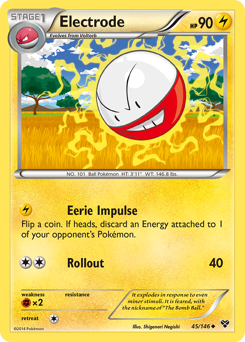
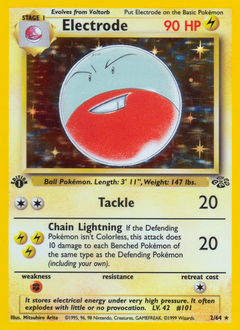
Electrode (In-Game & Casual PvP)
Situationally in-game, but terrible in serious competitive PvP.  Electrode outspeeds almost everything in a standard playthrough, making it an excellent fast pivot and Dual Screens setter. However, its abysmal base 80 Special Attack and shallow movepool prevent it from functioning as a reliable sweeper against bulky opponents.
Verdict
Electrode is a one-trick pony that guarantees you move first, but rarely hits hard enough to make that first move count.
Rating 4/10 · Tier C-in-game, Unviable in competitive singles · Role : Fast Pivot / Dual Screens Setter
Strengths
- Base 150 Speed guarantees it moves first against nearly every unboosted Pokémon.
- Excellent utility with Volt Switch for momentum and Taunt to stop enemy setups.
- Reliable Dual Screens setter to protect frailer teammates.
- Soundproof ability provides useful immunities to moves like Roar and Bug Buzz.
Weaknesses
- Base 80 Special Attack is too low to secure one-hit knockouts late in the game.
- Incredibly shallow movepool makes it predictable and walled easily.
- Completely shut down by Ground-type Pokémon unless relying on Terastallization.
- Frail defenses mean it rarely survives a strong neutral physical attack.
Electrode Base Stats Breakdown

BEST COUNTERS


SIZE COMPARISON
SPRITE GALLERY
 OFFICIAL ARTWORK
 OFFICIAL SHINY
 HOME 3D
 HOME 3D SHINY
 FRONT
FRONT FRONT SHINY
 BACK
BACK BACK SHINY
 ANIMATED
 ANIMATED SHINY
Tier & Role: The Fastest Utility Pivot
Electrode survives entirely on its base 150 Speed tier. In standard playthroughs of Pokémon Scarlet and Violet, it outspeeds literally every opponent you face.
However, outspeeding the opponent is only half the battle. With a meager base 80 Special Attack, Electrode fails to secure one-hit knockouts against anything that does not have a glaring weakness to Electric-type moves.
Because it lacks the raw damage output to function as a dedicated sweeper, its optimal role shifts toward utility. Electrode functions best as a fast pivot or a dedicated Dual Screens setter.
The Fast Pivot Strategy
Using Volt Switch allows Electrode to deal chip damage and immediately swap to a better-positioned teammate. This guarantees you maintain momentum during tough trainer battles without taking unnecessary damage.
Setting up Reflect and Light Screen is almost guaranteed thanks to its speed. This utility allows slower, bulkier setup sweepers to enter the field safely and boost their stats without getting heavily punished by the AI.
Best Movesets & Mechanics for Story Mode
Since Electrode lacks viability in serious competitive formats, optimizing its moveset for in-game progression is your primary focus. The strategy revolves around maximizing its few offensive tools while leaning into its speed.
Electro Ball is heavily reliant on the speed difference between the user and the target. Because Electrode is naturally faster than almost the entire Pokédex, this move frequently hits its maximum base power of 150 during a playthrough.
- Electro Ball: Your primary nuke against slow targets.
- Volt Switch: Essential for pivoting out of bad matchups, especially against bulky attackers.
- Tera Blast (Ice or Grass): Mandatory in Scarlet and Violet to hit Ground-type counters.
- Taunt / Light Screen: Stops enemy setup or cushions incoming damage for your team.
For the ability, Soundproof offers excellent utility by granting immunity to moves like Roar, Bug Buzz, and Hyper Voice. Aftermath is highly situational and often results in unnecessary chip damage to the opponent only when Electrode faints, which you generally want to avoid.
Equipping the Magnet boosts its Electric-type damage without locking it into a single move like Choice Specs would. If you run a Dual Screens set, Light Clay is the optimal item to extend screen duration from five to eight turns.
Best Uses & Key Matchups
Electrode shines brightest when dismantling specific gym leaders or Elite Four members who rely on fast, frail Pokémon. Its speed ensures it strikes first, preventing enemy sweepers from gaining momentum.
Water and Flying-type matchups are where Electrode puts in the most work. It easily outpaces threats like  Gyarados,
  Talonflame, and
  Floatzel, hitting them with super-effective damage before they can react.
Key Story Matchups in Gen 9
During the Scarlet and Violet storyline, Electrode easily handles Kofu's Water-type team. It outspeeds and threatens his entire roster, though you must be careful around his  Wugtrio if it survives a hit.
Against Larry's Flying-type Elite Four team, Electrode is a reliable lead. It can set up screens to protect your team or spam Electro Ball against his slower Flying-types like  Tropius and
  Oricorio.
It also functions well as an anti-lead against enemy setup Pokémon. By using Taunt on turn one, Electrode completely shuts down entry hazard setters or AI opponents attempting to use Dragon Dance or Swords Dance.
The Legends: Z-A Context & Modern Mechanics
Looking ahead to Pokémon Legends: Z-A, speed mechanics play a massive role in how Pokémon perform. If the game retains the action order system from Pokémon Legends:  Arceus, Electrode's base 150 Speed becomes a massive tactical advantage.
In the Agile/Strong style system, extremely fast Pokémon can often manipulate the turn order to act twice before the opponent moves. This allows Electrode to chip an enemy with an Agile style move and immediately follow up with a Strong style finishing blow.
However, without the Terastallization mechanic from Scarlet and Violet, Kantonian Electrode loses its best tool for dealing with Ground types. Unless Legends Z-A introduces a new mechanic or expands its movepool, it will remain completely walled by any Pokémon immune to Electric attacks.
In the current Gen 9 ecosystem, Terastallization is the only reason Electrode can stay on the field against its counters. Using Tera Ice with Tera Blast provides a vital surprise factor, instantly removing threats like  Garchomp or
  Clodsire that expect a free switch-in.
Honest Weaknesses: Why It Falls Off
Electrode's fatal flaw is its incredibly shallow movepool. Outside of Electric and Normal-type attacks, it learns almost nothing of value naturally. This makes it entirely predictable and easy to counter.
Ground-type Pokémon completely invalidate standard Electrode. Because it lacks access to moves like Surf or Energy Ball, a Ground-type switching in forces Electrode to flee immediately, costing you a turn and halting your momentum.
Offensive Shortcomings
Base 80 Special Attack is simply too low for the late game. Once enemy Pokémon reach level 50 and beyond, their natural bulk allows them to easily survive a Volt Switch or Thunderbolt.
This lack of firepower means Electrode often acts as a minor nuisance rather than a true threat. If it doesn't have a super-effective matchup, it becomes dead weight in your party.
Furthermore, its physical bulk is practically non-existent. With base 60 HP and base 70 Defense, any strong physical attacker that manages to survive a hit will likely knock Electrode out in return. Priority moves like Extreme Speed or Sucker Punch bypass its speed advantage entirely and exploit this frailty.
Teammates & Synergies
To mitigate Electrode's glaring weaknesses, you must pair it with Pokémon that handle Ground and Grass types. Building a core around its Volt Switch pivoting is the most effective way to use it in a playthrough.
Water and Grass-type teammates are essential. A bulky Water-type like  Dondozo or
  Azumarill can easily switch into the Ground-type attacks aimed at Electrode. In return, Electrode handles the Electric and Flying threats that endanger your Water or Grass types.
Setup Sweeper Partners
Electrode's ability to set up Reflect and Light Screen makes it an excellent enabler for slow setup sweepers. Pokémon that need a turn or two to use Dragon Dance, Quiver Dance, or Swords Dance benefit massively from the damage reduction.
For example, pivoting from Electrode into a  Baxcalibur or
  Volcarona under Dual Screens gives them the safety net they need to boost their stats. Once set up, these partners can sweep the opponent's team, compensating for Electrode's lack of raw damage.
Avoid Electrode If... & Better Alternatives
Do not put Electrode on your team if you need a dedicated wallbreaker or a late-game sweeper. It simply does not have the stats or the moves to punch through bulky opponents like  Garganacl or
  Ting-Lu.
You should also avoid using Electrode if your team already struggles against Ground types. Adding an Electric-type that cannot fight back against Ground will only compound your team's structural weaknesses.
Better Alternatives
If you want a fast Electric-type with actual offensive presence,  Kilowattrel is a vastly superior choice in Scarlet and Violet. It boasts base 125 Speed, which is more than enough for the story, and adds a Flying typing that grants immunity to Ground attacks.
 Pawmot is another excellent alternative. It provides high physical attack, a secondary Fighting typing for much better coverage, and access to Revival Blessing. Pawmot hits significantly harder than Electrode while still maintaining a great speed tier.
For players who prefer raw power over speed,  Magnezone outclasses Electrode entirely. Its massive Special Attack and incredible Steel/Electric defensive typing make it a far more reliable asset for clearing the game.
Related Pokémon guides
Compare Stats & Moves
Frequently Asked Questions About Electrode
Is Electrode better than Jolteon?
No. While Electrode is faster, Jolteon is significantly better due to its base 110 Special Attack. Jolteon hits much harder, has access to Shadow Ball for better coverage, and its base 130 Speed is already fast enough to outspeed almost everything in-game.
What is the best moveset for Electrode?
For a standard playthrough, the best moveset is Electro Ball, Volt Switch, Taunt, and Tera Blast (Ice). If you are playing a supportive role, swap Electro Ball and Tera Blast for Reflect and Light Screen while holding Light Clay.
Why is Electrode not used in competitive PvP?
Electrode is unviable in competitive formats like Smogon SV because its base 80 Special Attack is too low to threaten modern defensive Pokémon. Additionally, its extremely shallow movepool makes it predictable, allowing Ground types to switch in for free and force it out.
Is Hisuian Electrode better than Kantonian Electrode?
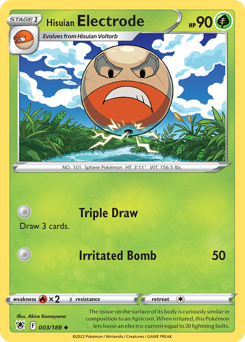
Yes. Hisuian Electrode gains a secondary Grass typing, giving it STAB moves like Energy Ball and Chloroblast to hit Ground-types super effectively. This drastically improves its offensive coverage compared to the pure Electric-type Kantonian version.
Pokedex.me is an unofficial fan site, not affiliated with Nintendo, Game Freak or The Pokémon Company. Competitive takes reflect observed usage (Smogon SV stats).