Pidgey (In-Game & Competitive)
No,  Pidgey is not good for serious competitive play or mid-to-late game playthroughs. As a first-stage early-route bird, its base stats are completely inadequate for handling mid-tier threats. It serves strictly as an early-game crutch or a temporary Flying-type pivot until you catch stronger regional alternatives.
Verdict
Pidgey is a nostalgic early-route bird that requires immediate evolution to maintain any gameplay relevance.
Rating 3/10 · Tier D-(In-Game) / Unviable (PvP) · Role : Early-Game Physical Attacker
Strengths
- Available extremely early in its native regions.
- Access to reliable early STAB moves like Quick Attack and Gust.
- Keen Eye prevents annoying accuracy drops from wild Pokémon spamming Sand Attack.
Weaknesses
Pidgey Base Stats & Matchup Data

BEST COUNTERS


SIZE COMPARISON
SPRITE GALLERY
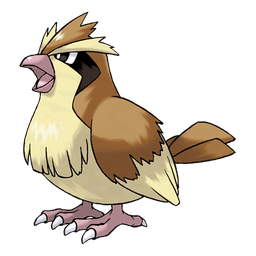 OFFICIAL ARTWORK
 OFFICIAL SHINY
 HOME 3D
 HOME 3D SHINY
 FRONT
FRONT FRONT SHINY
 BACK
BACK BACK SHINY
 ANIMATED
 ANIMATED SHINY
Tier & Role: The Quintessential Route 1 Bird
Pidgey occupies a very specific niche: the early-game crutch. In any playthrough where it is available, it serves as a temporary physical attacker to help you survive the initial routes.
From a competitive standpoint, Pidgey is entirely absent from modern ranked ladders like Scarlet and Violet. Even in formats where it is legal, such as Smogon's Little Cup (LC), it sits firmly in the unviable tier.
Its base stats are simply too low to function as a dedicated sweeper or wallbreaker. Instead, its role is strictly transitional, providing basic Normal and Flying coverage until better options unlock.
Standard Early-Game Moveset
If you are running Pidgey in a standard playthrough, your options are limited but functional for the first few hours.
- Quick Attack: Essential for picking off weakened targets with STAB priority.
- Gust / Wing Attack: Your primary Flying-type STAB for dealing with early Bug and Grass types.
- Sand Attack: A desperation utility move to cheese difficult fights by dropping opponent accuracy.
- Roost: Useful for sustain if you keep it around long enough to learn it, though rare in early levels.
You rely entirely on its dual STAB combination. It lacks the coverage movepool to handle anything that resists Normal or Flying attacks.
Best Uses & Matchups: Surviving the Early Game
Pidgey shines exclusively in the first few hours of a playthrough. In Kanto-based games or retro runs, it is practically mandatory for dealing with early Bug Catcher trainers and rival encounters.
Its Keen Eye ability is surprisingly useful in these early stages. It completely ignores the accuracy drops from wild Pokémon spamming Sand Attack, saving you trips to the Pokémon Center and preventing frustrating misses.
Here are the specific matchups where Pidgey actually pulls its weight:
- Early Bug-types:
 Caterpie,
  Weedle, and their evolutions melt to a basic Gust or Wing Attack.
 - Grass-types:
 Oddish and
  Bellsprout are easily handled, provided Pidgey is adequately leveled.
 - Rival's Starter (if
 Bulbasaur): Pidgey provides a safe pivot and super-effective damage against a rival's early Grass starter.
Once you hit the second gym, however, Pidgey's damage output drops off a cliff. You will quickly notice it failing to secure KOs against standard route trainers, forcing you to rely on potions or switch-ins.
Competitive Little Cup (LC) Reality
Players often wonder if Pidgey has a hidden niche in Little Cup (LC), the format dedicated to unevolved Pokémon. The harsh truth is that it does not.
Pidgey's offensive and speed stats are incredibly underwhelming when compared to the top-tier Flying types of the format. It lacks the explosive power required to break through LC defensive walls.
Why Pidgey Fails in LC
- Outclassed by
 Doduo: Doduo boasts massively superior Attack and Speed stats, making it a far better Normal/Flying physical attacker.
 - Outclassed by
 Rufflet: Rufflet offers significantly better bulk and the Hustle ability, hitting much harder than Pidgey ever could.
 - Lack of Coverage: Pidgey's movepool is painfully barren. Without moves like Brave Bird or reliable Fighting-type coverage, it gets walled instantly by Rock and Steel types.
If you are building an LC team, leave Pidgey in the PC. Bringing it to a serious match puts you at an immediate disadvantage, as it fails to pressure any common meta threats.
Honest Weaknesses: Where the Bird Falls Short
Pidgey's flaws are glaring and unavoidable. Its base stat total is among the lowest in the franchise, meaning it cannot take a hit or deal meaningful damage outside of the tutorial routes.
Its defensive typing leaves it vulnerable to common early-game threats. Electric attacks from wild  Pikachu or Rock Throws from
  Geodude will almost always result in a one-hit KO against Pidgey.
Furthermore, Pidgey is heavily reliant on its item slot to do any real damage. Without a Sharp Beak or Silk Scarf, its attacks feel like minor inconveniences to mid-game opponents.
Even its alternative abilities offer little competitive value. Tangled Feet requires you to be confused to gain evasion, which is far too inconsistent and risky to rely on in any serious battle.
Avoid If... & Superior Alternatives
Do not put Pidgey on your team if you are looking for a long-term Flying-type carry. It requires too much babying to reach its final evolution,  Pidgeot, which itself is mediocre without its Mega Evolution.
With Pokémon Legends: Z-A on the horizon, the Pidgey line might regain relevance if Mega Pidgeot returns. However, in its base form across modern generations, it remains completely outclassed.
Avoid using Pidgey if your team already struggles against Rock, Steel, or Electric types. It provides zero defensive utility and cannot pivot safely into these attacks.
Better Alternatives to Catch
 Starly: The gold standard for early birds. Intimidate and access to Close Combat upon evolving make it infinitely better.
 Fletchling: Evolves into
  Talonflame, gaining the incredible Fire/Flying typing and the Gale Wings ability.
 Corviknight (
 Rookidee): If playing modern titles, Rookidee evolves into an absolute defensive powerhouse with a pristine Steel/Flying typing.
- Doduo: If you are restricted to Kanto, Doduo hits significantly harder and is much faster right out of the box.
Ultimately, Pidgey is a nostalgia trip. Catch it for the Pokédex, use it for the first hour, and then replace it with a bird that actually impacts the game.
Related Pokémon guides
Explore Competitive Tiers
Pidgey FAQ: Player Questions Answered
Is Pidgey better than Spearow?
No, Spearow is objectively better in the early game. Spearow has higher offensive stats and learns Peck much earlier than Pidgey learns Gust, giving it immediate Flying-type STAB to deal with Bug and Grass types effectively.
Can Pidgey be used in Little Cup (LC)?
Pidgey is technically legal in LC, but it is completely unviable. It is entirely outclassed by other Normal/Flying types like Doduo, which hits much harder, and Rufflet, which has better bulk and abilities.
What is the best nature for Pidgey?
Jolly or Adamant. A Jolly nature boosts its Speed, allowing it to outspeed early-game threats, while Adamant maximizes its low physical attack to help it secure KOs with Quick Attack and Wing Attack.
Does Pidgey get better when it evolves?
Pidgeotto is only a marginal upgrade, but Pidgeot offers decent speed. However, without its Mega Evolution, the entire Pidgey line remains outclassed by almost every other regional bird in the franchise.
Pokedex.me is an unofficial fan site, not affiliated with Nintendo, Game Freak or The Pokémon Company. Competitive takes reflect observed usage (Smogon SV stats).