The Evolution Mechanic: Reaching Level 40
Disclaimer: Pokedex.me is an unofficial fan-site and is not affiliated with Nintendo, Game Freak, or The Pokémon Company.
Evolving Lileep requires reaching level 40 through standard battle experience, Exp. Candies, or Rare Candies. There are no secondary conditions, friendship thresholds, time-of-day requirements, or evolutionary stones involved in this process. Once the level 40 threshold is met, the evolution sequence triggers automatically.
In older generations like Ruby, Sapphire, and Emerald, players receive the Root Fossil at the Mirage Tower and revive it at the Devon Corporation in Rustboro City. The revived Pokémon arrives at level 20, creating a mandatory 20-level grind. Players relying on the Exp. Share in Generation 3 must allocate significant time against trainers on Route 111 or Victory Road to reach the evolution threshold.
Modern generations drastically reduce this friction. In Pokémon Sword and Shield (via The Crown Tundra DLC) and Pokémon Scarlet and Violet (The Indigo Disk), players can bypass traditional grinding using Exp. Candies L and XL. Feeding a freshly caught level 60 specimen a single Rare Candy triggers the evolution instantly, entirely skipping the mid-game leveling phase.
Competitive Verdict: Is Cradily Worth the Grind?
 Cradily earns a strict 6/10 rating for competitive singles and VGC formats. It functions primarily as a specialized Special Wall, relying heavily on its unique typing and ability to absorb specific attacks. Unlike offensive fossil evolutions such as
  Aerodactyl or
  Tyrantrum, Cradily operates exclusively as a slow, methodical staller and pivot.
Its viability hinges entirely on the Hidden Ability Storm Drain. This ability neutralizes Water-type attacks directed at Cradily or its allies in doubles, granting an immunity and raising its Special Attack by one stage. Without Storm Drain, Cradily defaults to Suction Cups, which prevents phazing via Roar or Whirlwind but provides zero defensive synergy against common attacking types.
Players must weigh Cradily against superior Grass-type walls like  Amoonguss or
  Ferrothorn. While Cradily boasts access to reliable recovery (Recover) and entry hazards (Stealth Rock), its abysmal base Speed makes it highly susceptible to Taunt. It serves best as a niche counter-pick in lower competitive tiers (NU or PU) where premier walls are banned.
Typing Analysis: The Rock/Grass Double-Edged Sword
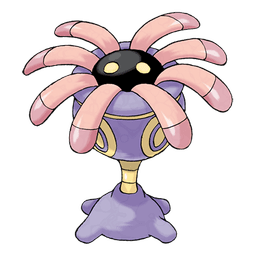
The Rock/Grass typing is completely unique to the  Lileep evolutionary line. Defensively, this combination creates a polarizing matchup spread. Cradily carries exactly two resistances: Normal and Electric. When factoring in Storm Drain, it gains a functional immunity to Water, allowing it to easily pivot into common attacks like Scald or Hydro Pump without taking damage.
However, the weaknesses severely bottleneck its defensive potential. Cradily takes super-effective damage from Fighting, Bug, Steel, and Ice-type moves. Ice and Fighting are ubiquitous coverage types in competitive play, meaning Cradily is constantly threatened by Close Combat or Ice Beam from faster sweepers. The lack of a Ground or Rock resistance also prevents it from checking common physical attackers effectively.
Offensively, Rock and Grass provide excellent neutral coverage. Grass-type STAB (Same Type Attack Bonus) handles bulky Water and Ground types, while Rock-type STAB hits Flying, Bug, and Fire types that typically resist Grass. This synergy forces opponents into difficult switching decisions, especially if Cradily has accumulated Special Attack boosts from Storm Drain.
Optimal Movesets and Role Execution (Singles)
In standard singles formats, Cradily operates best as a specially defensive hazard setter. A standard EV spread of 252 HP / 4 Def / 252 SpD with a Calm nature maximizes its ability to absorb special hits. Leftovers is the mandatory held item, providing passive recovery to supplement its bulk.
The optimal moveset consists of Stealth Rock, Recover, Giga Drain, and Toxic. Stealth Rock provides essential team support by punishing opponent switches. Recover is non-negotiable, allowing Cradily to stall out poisoned targets and maintain its HP throughout long matches. Giga Drain serves as reliable STAB that provides secondary healing, while Toxic puts opposing walls on a strict timer.
Players can substitute Toxic with Rock Blast or Power Gem if the team requires immediate damage against Flying or Fire types. However, dropping Toxic makes Cradily extremely passive, allowing setup sweepers like  Volcarona or
  Dragonite to use it as setup fodder. Positioning is critical; Cradily must be brought in on predicted Water or Electric attacks to maximize its utility.
VGC and Doubles Utility: The Storm Drain Redirection
Cradily's role shifts dramatically in VGC and doubles formats, where Storm Drain becomes an active redirection tool. Storm Drain automatically draws all single-target Water-type moves to Cradily, protecting vulnerable teammates. This mechanic made Cradily a niche but effective partner for Pokémon with quadruple Water weaknesses, such as  Coalossal or Primal
  Groudon in past generations.
When paired with a Weakness Policy Coalossal, Cradily prevents opposing  Urshifu (Rapid Strike) or
  Kyogre from easily OHKOing the Fire/Rock type. Furthermore, Cradily has access to String Shot and Rock Tomb, allowing it to provide crucial speed control for its slower partners. Its immunity to Spore (due to its Grass typing) also makes it an excellent counter to Amoonguss.
Despite these advantages,  Gastrodon generally outclasses Cradily as a Storm Drain user in VGC. Gastrodon's Water/Ground typing offers only a single weakness (Grass) compared to Cradily's four, making it far more reliable defensively. Cradily is only selected over Gastrodon when the team specifically requires a Grass-type attacker or a Spore immunity.
Historical Context: Acquiring the Root Fossil
The method for acquiring the Root Fossil varies wildly across generations, impacting how easily players can add Lileep to their team. In Generation 3, players must choose between the Root Fossil and Claw Fossil at the Mirage Tower. The unchosen fossil sinks into the sand, requiring a post-game visit to the Desert Underpass in Pokémon Emerald to retrieve it.
Generation 4 introduced the Underground in Sinnoh, where the Root Fossil is a version-exclusive mining reward in Pokémon Diamond. In Generation 5, players receive a random fossil daily from a worker in Twist Mountain. This RNG-based acquisition makes planning a playthrough around Cradily frustrating in the Unova region.
Recent titles have abandoned the fossil restoration mechanic entirely. In Pokémon Sword and Shield, Lileep is caught directly in the wild within the Crown Tundra's Giant's Bed area. Similarly, in Pokémon Scarlet and Violet's Indigo Disk DLC, Lileep spawns naturally in the Coastal Biome of the Terarium, allowing players to catch it in specialized Poké Balls and immediately evolve it with Candies.
EVOLUTION CHAIN

SPRITE GALLERY
 OFFICIAL ARTWORK
 OFFICIAL SHINY
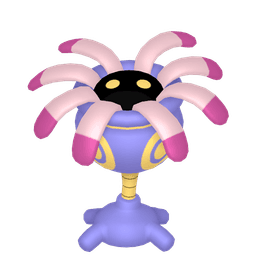 HOME 3D
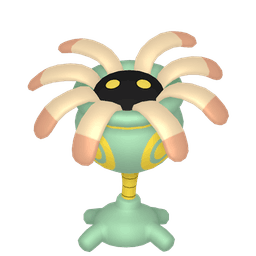 HOME 3D SHINY
 FRONT
FRONT FRONT SHINY
 BACK
BACK BACK SHINY
 ANIMATED
 ANIMATED SHINY
Related Pokémon guides
Competitive Strategies
Frequently Asked Questions About Evolving Lileep
At what level does Lileep evolve into Cradily?
Lileep evolves into Cradily exactly at level 40. There are no other requirements, such as friendship levels, specific times of day, or held items. Simply gaining experience through battle or using Rare Candies will trigger the evolution upon reaching the threshold.
Can I use a Leaf Stone to evolve Lileep early?
No, evolutionary stones have no effect on Lileep. Despite being a Grass-type, it does not respond to the Leaf Stone. The only valid method to achieve its evolution is by leveling it up to 40.
Which ability is better for Cradily: Suction Cups or Storm Drain?
Storm Drain is universally superior for competitive play. It provides a full immunity to Water-type moves and boosts Special Attack by one stage when hit by one. Suction Cups only prevents forced switching, which offers far less defensive utility.
Is Cradily a good competitive Pokémon?
Cradily is a niche Special Wall that excels in lower tiers (PU/NU). Its viability relies on its unique Rock/Grass typing, reliable recovery, and Storm Drain ability. However, its low speed and common weaknesses to Ice and Fighting prevent it from dominating higher tiers.