The Evolution Trigger: Using a Moon Stone
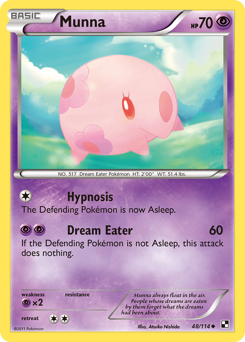
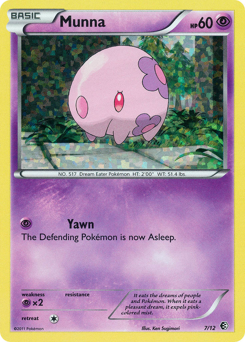
Evolving  Munna requires a single item: a Moon Stone. Unlike Pokémon that evolve through leveling up, trading, or friendship, Munna's evolution is entirely item-dependent. You simply open your bag, select the Moon Stone, and apply it directly to Munna.
This mechanic has remained unchanged since Munna's introduction in Generation 5 (Pokémon Black and White). Because it is a stone evolution, you can technically evolve a Level 1 Munna immediately after hatching it. However, doing so puts you at a massive disadvantage mechanically.
Disclaimer: Pokedex.me is an unofficial fan site. We analyze game mechanics to provide optimal player strategies. Stone evolutions in the Pokémon series typically halt a Pokémon's ability to learn new moves via leveling up.  Musharna follows this rule strictly, learning absolutely nothing via level-up once the Moon Stone is consumed.
When to Evolve Munna: The Movepool Dilemma
Timing your Moon Stone usage is the most critical decision when building a Musharna. If you evolve Munna at Level 10, Musharna will be permanently stuck with basic attacks like Tackle and Defense Curl unless you heavily invest in Technical Machines (TMs) or Technical Records (TRs).
To build a self-sufficient Musharna without wasting valuable late-game items, you must wait for Munna to learn its core moves naturally. In Generation 8 (Sword and Shield), Munna's level-up learnset provides its best competitive tools.
Here are the crucial level milestones to hit before using your Moon Stone:
- Level 16: Moonlight (Essential reliable recovery)
- Level 37: Psychic (Primary STAB damage)
- Level 40: Moonblast (Crucial coverage against Dark-types)
- Level 44: Dream Eater (Optional, only useful in specific sleep-based sets)
For optimal resource management, Level 40 is the definitive stopping point. Once Munna learns Moonblast, apply the Moon Stone immediately. If you already possess TR11 (Psychic) and TR92 (Dazzling Gleam), you can bypass this wait and evolve Munna at Level 16 right after it learns Moonlight.
Where to Find Moon Stones
Acquiring a Moon Stone depends entirely on which game you are playing. The item is usually tied to specific geographical locations or daily repeatable events.
In Pokémon Black and White, the earliest Moon Stone is located in the Dreamyard. You can find it as a hidden item in the basement after obtaining the Cut HM. Another guaranteed Moon Stone is found later in Twist Mountain.
In Pokémon Sword and Shield, farming Moon Stones is much easier thanks to the Wild Area. You have multiple reliable spawn points:
- Dusty Bowl: A Moon Stone frequently respawns as a hidden shiny sparkle behind the large rocks.
- Bridge Field: The Digging Duo (specifically the stamina-focused brother on the right) can excavate Moon Stones for 500 Watts per attempt.
- Lake of Outrage: Hidden items behind the large stone pillars often yield evolutionary stones, including the Moon Stone.
For players in Generation 6 (X/Y, ORAS) or Generation 7 (Sun/Moon), Moon Stones are commonly held by wild  Clefairy (5% chance) or found in locations like Terminus Cave or Route 13.
Competitive Verdict: Is Musharna Good?
Musharna earns a solid 6/10 rating in lower-tier competitive formats (like PU or NU). It operates effectively as a bulky Trick Room setter or a slow Calm Mind sweeper. Its viability stems from its massive base 116 HP and respectable 85/95 defensive stats.
With a base Speed of 29, Musharna is almost guaranteed to move first under Trick Room conditions. Its base 107 Special Attack ensures it isn't passive, allowing it to punch holes in opposing teams with Psychic and Dazzling Gleam once Trick Room is active.
However, Musharna has glaring flaws. It is completely shut down by Taunt, rendering its setup moves useless. Furthermore, its pure Psychic typing leaves it vulnerable to common U-turn pivots and Knock Off users, which heavily damage it while removing its essential Leftovers or Colbur Berry.
When comparing Musharna to  Reuniclus, Musharna often falls short due to Reuniclus possessing the Magic Guard ability, which grants immunity to Toxic and entry hazards. Musharna must rely on Synchronize, which merely passes status conditions back to the attacker, or Telepathy, which is only useful in VGC Doubles formats.
Optimal Movesets and Team Synergy
To maximize Musharna's potential, you must build around its bulk and lack of speed. The standard Calm Mind set utilizes its natural bulk to create an unbreakable wall. A moveset of Calm Mind, Moonlight, Psychic, and Dazzling Gleam (or Signal Beam in older generations) provides perfect neutral coverage.
Here is a breakdown of Musharna's competitive profile:
- Pros: Excellent mixed bulk, reliable instant recovery in Moonlight, functions as a highly consistent Trick Room setter, hits hard unboosted.
- Cons: Extreme reliance on Trick Room for offensive presence, highly susceptible to Toxic stalling, weak to common Dark and Bug-type utility moves.
Musharna requires specific teammates to cover its weaknesses. Fighting-types like  Cobalion or
  Scrafty are excellent partners, as they resist Dark and Bug attacks aimed at Musharna while threatening the Steel-types that resist Musharna's Psychic STAB. In return, Musharna absorbs the Fighting and Psychic attacks directed at them.
EVOLUTION CHAIN

SPRITE GALLERY
 OFFICIAL ARTWORK
 OFFICIAL SHINY
 HOME 3D
 HOME 3D SHINY
 FRONT
FRONT FRONT SHINY
 BACK
BACK BACK SHINY
 ANIMATED
 ANIMATED SHINY
Related Pokémon guides
Explore More Mechanics
Frequently Asked Questions About Munna's Evolution
Can Munna evolve without a Moon Stone?
No. Munna can only evolve into Musharna by being exposed to a Moon Stone. Leveling up, trading, or increasing friendship will not trigger the evolution under any circumstances.
What level should I evolve Munna?
Level 40 is the optimal point to evolve Munna. Waiting until Level 40 allows Munna to naturally learn Psychic (Level 37) and Moonblast (Level 40), saving you valuable TMs or TRs.
Does Musharna learn any moves by leveling up?
No. Once Munna evolves into Musharna, its level-up learnset is completely empty. Musharna can only learn moves via TMs, TRs, or Move Tutors, which is why delaying the evolution is highly recommended.
Is Musharna better than Reuniclus?
Generally, Reuniclus is considered superior in competitive play due to its Magic Guard ability, which prevents damage from Toxic, burn, and entry hazards. Musharna has slightly better physical bulk but lacks this crucial utility.