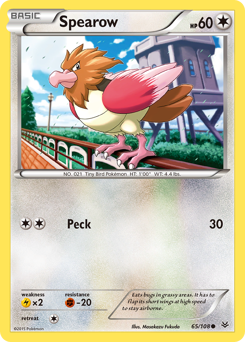
Spearow (In-Game & Competitive)
Verdict
 Spearow peaks at level 20 when it evolves into
  Fearow and learns Drill Peck, but its utility plummets shortly after.
Rating 4.5/10 · Tier C-(In-Game), Untiered (Competitive) · Role : Early-Game Physical Attacker / HM Flyer
Strengths
- Evolves early at level 20, providing an immediate mid-game power spike.
- Learns Drill Peck, a highly reliable 80 BP Physical Flying STAB without recoil.
- Outspeeds and out-damages the
 Pidgey line during the early stages of Kanto and Johto games.
Weaknesses
- Abysmal defensive stats (40 HP / 30 Def / 31 SpD) make it a glass cannon that shatters instantly.
- Completely absent from modern competitive formats, including Scarlet/Violet and Legends Z-A.
- Severely outclassed by almost every other regional bird introduced after Generation 2.
Spearow Base Stats

BEST COUNTERS


SIZE COMPARISON
SPRITE GALLERY
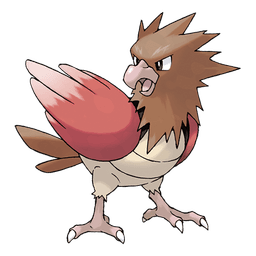 OFFICIAL ARTWORK
 OFFICIAL SHINY
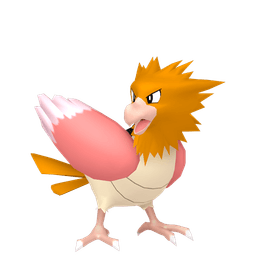 HOME 3D
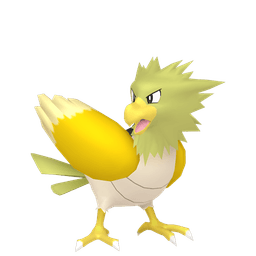 HOME 3D SHINY
 FRONT
FRONT FRONT SHINY
 BACK
BACK BACK SHINY
 ANIMATED
 ANIMATED SHINY
Tier & Role: The Early-Game Aggressor
Spearow occupies a highly specific niche in the Pokémon franchise: the aggressive early-game attacker. While often dismissed as a generic Route 1 bird, its actual value depends entirely on your current objective.
For a standard story playthrough in Kanto or Johto, Spearow is a solid C-Tier choice. It functions perfectly as an early-game physical sweeper and a reliable HM Fly user. However, in any competitive PvP format, Spearow and its evolution Fearow are strictly Untiered.
Looking at its core identity, Spearow boasts a base 60 Attack and 70 Speed. These stats are excellent for the first few hours of a Pokémon game. It will naturally outspeed most early-game bugs and rodents.
Unfortunately, its defensive profile is abysmal. With 40 HP, 30 Defense, and 31 Special Defense, Spearow cannot take a hit. Its Normal/Flying typing provides a crucial Ground immunity, but leaves it highly vulnerable to common Rock, Electric, and Ice attacks.
Its abilities offer very little practical utility. Keen Eye prevents accuracy drops, which is mildly helpful against early-game Sand Attack spam. Sniper boosts critical hit damage, but relying on RNG for damage output is a poor strategy.
Early Game Performance Across Generations
Spearow's true time to shine is during the early stages of mainline games, particularly in Generations 1, 2, 3, and 4. Its performance heavily outclasses its primary rival, Pidgey, during the first few gyms.
In Pokémon Red, Blue, and Yellow, Spearow learns Peck at level 9. This gives it an immediate, reliable Flying-type STAB move to handle Bug and Grass types in Viridian Forest. Pidgey, by contrast, is stuck with Normal-type Gust until later generations.
In Gold, Silver, and Crystal (as well as HeartGold and SoulSilver), Spearow is a fantastic counter to Bugsy's Gym. A traded Spearow named "Kenya" is even given to the player early on, providing boosted experience and a massive advantage against early Johto challenges.
Its utility remains consistent in remakes like FireRed, LeafGreen, and Let's Go  Pikachu/
 Eevee. It serves as a fast, aggressive option that requires very little investment to yield immediate results.
However, this early-game dominance is strictly temporary. Once you reach the mid-game and encounter fully evolved Pokémon with higher base stats, Spearow's low bulk becomes a severe liability.
The Evolution Factor & Movepool Deep Dive
The most significant factor in Spearow's viability is its evolution into Fearow at level 20. This early evolution provides a massive, immediate power spike right when the mid-game difficulty begins to ramp up.
Fearow jumps to a respectable 90 base Attack and 100 base Speed. While these numbers are unimpressive in modern competitive play, they are more than enough to sweep mid-game NPC trainers.
The crown jewel of the Fearow line's movepool is Drill Peck. Learned naturally by leveling up, this 80 Base Power Flying-type attack is incredibly reliable. It offers high damage without the crippling recoil damage associated with Brave Bird.
Offensive and Support Options
Beyond Drill Peck, the movepool is relatively shallow but functional. Return or Double-Edge provide powerful Normal-type STAB options. Drill Run is an essential coverage move, allowing Fearow to hit the Rock and Electric types that resist its Flying attacks.
For utility, U-turn allows Fearow to act as a fast pivot, dealing chip damage before switching out to a safer teammate. Roost provides reliable recovery, though Fearow is rarely bulky enough to survive a hit while healing.
Toxic can be used to cripple defensive walls, but Fearow's frailty makes it a poor status spreader. Ultimately, its movepool dictates a hit-and-run playstyle.
Competitive Reality: Why It Fails in PvP
If you are looking for a competitive Pokémon, Spearow and Fearow are not the answer. Neither Pokémon appears in the Scarlet and Violet competitive meta, as they were excluded from the Generation 9 Pokédex.
Even in older generations or National Dex formats, the Fearow line is completely non-viable in standard tiers like OU or UU. Their stat distribution is simply too low to compete with modern power creep.
In lower tiers like PU or ZU, Fearow occasionally finds a niche as a fast Choice Band user or a U-turn pivot. However, it is almost always outclassed by  Dodrio, which boasts higher Attack, higher Speed, and access to Brave Bird and Knock Off.
In Little Cup (LC), Spearow is similarly disappointing. While its 70 base Speed is decent, it is far too fragile to survive priority moves or neutral hits. Birds like  Rufflet and
  Vullaby offer vastly superior bulk, abilities, and utility in the LC format.
For in-game Battle Facilities like the Battle Tower or Battle Frontier, Fearow can occasionally secure wins with a Choice Scarf or Focus Sash. However, relying on it for long win streaks is highly discouraged due to its inability to break through physical walls.
Spin-off Games: Pokémon GO & Mystery Dungeon
Spearow's lack of viability extends into most spin-off titles. In Pokémon GO, Spearow is nothing more than Pokédex filler. It requires 50 candies to evolve into Fearow, which is equally useless in both PvE raids and PvP battles.
In the GO Battle League, Fearow suffers from a terrible moveset. Its fast moves, Peck and Steel Wing, generate energy too slowly. Its charge moves, like Aerial Ace and Drill Run, lack the damage-to-energy efficiency required for the Great League.
If you need a Flying-type for Pokémon GO PvP, you are much better off investing in  Pidgeot,
  Noctowl, or
  Skarmory. Fearow simply cannot compete with their bulk and superior movepools.
The Pokémon Mystery Dungeon series offers a slightly better environment for Spearow. In these games, speed and movement are critical. Spearow's access to Agility allows it to boost the movement speed of the entire team, making dungeon navigation much safer.
Additionally, Mirror Move can be surprisingly effective in Mystery Dungeon, allowing Spearow to reflect powerful boss attacks. However, it remains a fragile explorer that requires careful positioning to survive monster houses.
Optimizing Spearow: Natures, EVs, and Items
If you are committed to using Spearow and Fearow, optimizing their stats is crucial. You must maximize their offensive presence, as they will never survive a prolonged defensive engagement.
The optimal Nature is Jolly, which boosts Speed at the expense of Special Attack. Outspeeding threats is Fearow's only defense. If you want to maximize raw damage, an Adamant Nature is a secondary option, though it leaves you vulnerable to faster attackers.
EV Spreads and Held Items
Your Effort Value (EV) spread should be a straightforward 252 Attack / 252 Speed / 4 HP. This maximizes its potential as a physical sweeper. Investing in its defenses is a complete waste of stats.
- Sharp Beak: The best item for a standard story playthrough. It boosts Drill Peck's damage by 20% without locking you into a single move.
- Choice Band: Ideal for lower-tier competitive formats. It provides a massive 50% boost to Attack, turning U-turn and Drill Peck into serious threats.
- Choice Scarf: Allows Fearow to act as a revenge killer, outspeeding naturally faster threats, though its damage output will feel underwhelming.
- Focus Sash: The only viable item for Spearow in Little Cup, guaranteeing it survives at least one hit to fire off a STAB attack.
Comparative Analysis vs. Other Regional Birds
To truly understand Spearow's place in the franchise, we must compare it to the other regional birds. Against Generation 1's Pidgey, Spearow is the clear winner for the early game. It hits harder, gets better moves earlier, and evolves faster.
However, once we look beyond Kanto, Spearow's flaws become glaring. Generation 3's  Taillow and
  Swellow completely outclass the Spearow line. Swellow's Guts ability allows it to fire off incredibly powerful Facades when statused, giving it a massive offensive niche that Fearow lacks.
Generation 4's  Starly and
  Staraptor make Fearow look like a joke. Staraptor boasts Intimidate, a phenomenal defensive ability, and access to Close Combat, allowing it to obliterate the Rock and Steel types that completely wall Fearow.
Modern birds like  Fletchling (
 Talonflame) and
  Rookidee (
 Corviknight) operate on an entirely different level. Talonflame's Gale Wings provides priority Flying moves, while Corviknight is a premier defensive wall in top-tier competitive play.
Compared to these titans, Spearow has no unique selling point. It has no defining ability, no signature move, and no secondary typing to give it an edge. It is a relic of Generation 1 design.
Weaknesses & When to Avoid Spearow
You should absolutely avoid using Spearow in any late-game scenario, especially against Elite Four members or Champion battles. Its base stat total of 442 (as Fearow) is simply too low to trade blows with fully evolved, high-level opponents.
Never keep Spearow in against Rock or Steel types. Pokémon like  Geodude,
  Onix, or Skarmory will completely wall its Normal/Flying STAB combination. If you do not have Drill Run, Fearow becomes dead weight in these matchups.
Avoid using Spearow in any modern ranked PvP format. It lacks the damage output to break through defensive cores and lacks the bulk to survive priority moves like Extreme Speed or Ice Shard.
If you need a fast, physical Flying-type, Dodrio is the superior alternative in almost every retro game. It has 110 base Attack and 110 base Speed, vastly outperforming Fearow.
If you are playing a game where it is available, Staraptor is the ultimate upgrade, offering better coverage, a better ability, and significantly higher damage output.
Related Pokémon guides
Competitive Guides
Frequently Asked Questions About Spearow
Is Spearow better than Pidgey?
Yes, for the early game. Spearow learns Flying-type moves much earlier and evolves into Fearow at level 20, whereas Pidgeotto doesn't evolve into Pidgeot until level 36. Spearow hits harder and faster during the first few gyms.
What is the best moveset for Spearow and Fearow?
A standard physical set includes Drill Peck, Drill Run, U-turn, and Return or Double-Edge. This maximizes its STAB damage while providing essential coverage against Rock and Electric types that would otherwise wall it.
Is Spearow viable in Pokémon GO PvP?
No. Spearow and Fearow lack the bulk and the optimal movepool required for the Great League. You are much better off using Pidgeot, Noctowl, or Skarmory for Flying-type roles in GO Battle League.
Why is Spearow not in Pokémon Scarlet and Violet?
Spearow was cut from the regional Pokédex in Generation 9, alongside several other Kanto classics. Its last mainline appearance was in Brilliant Diamond and Shining Pearl, meaning it cannot be used in modern SV competitive formats.
Pokedex.me is an unofficial fan site, not affiliated with Nintendo, Game Freak or The Pokémon Company. Competitive takes reflect observed usage (Smogon SV stats).